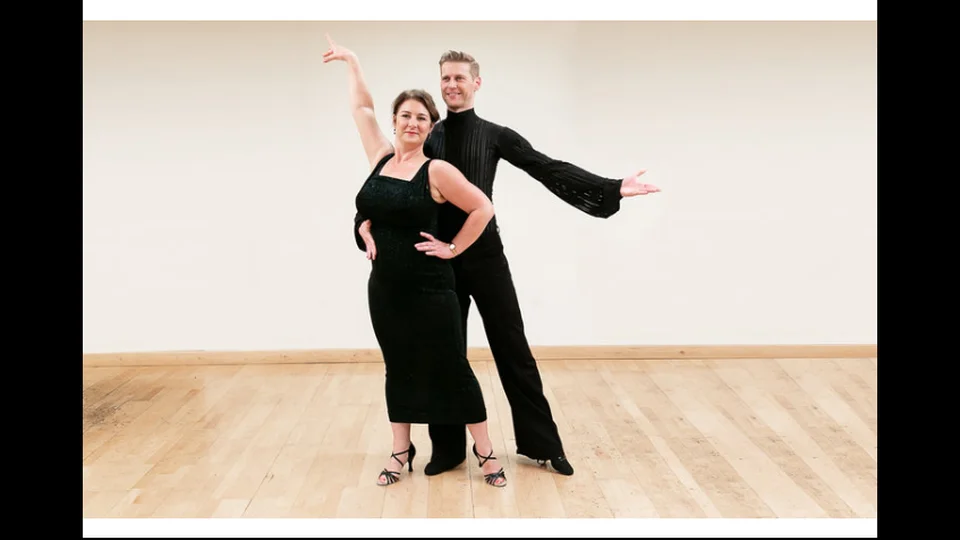
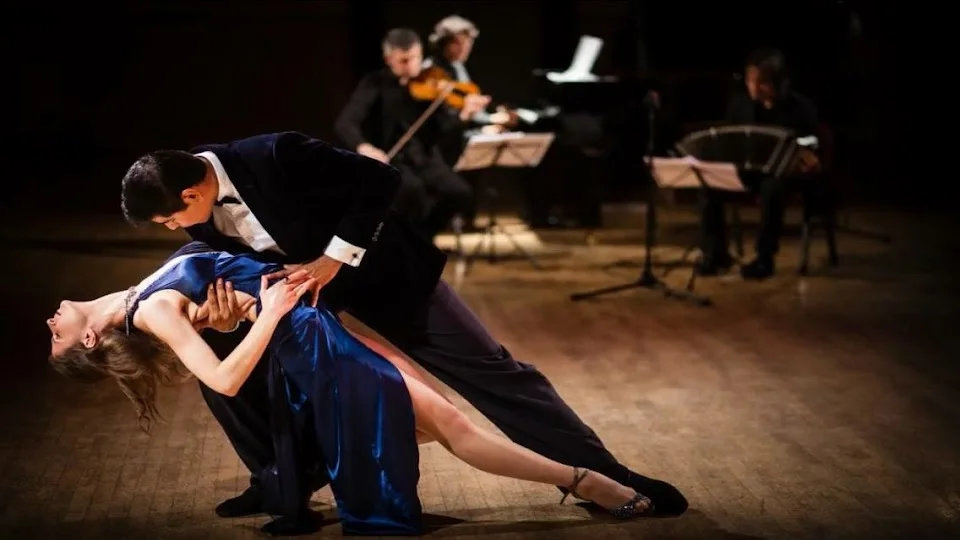
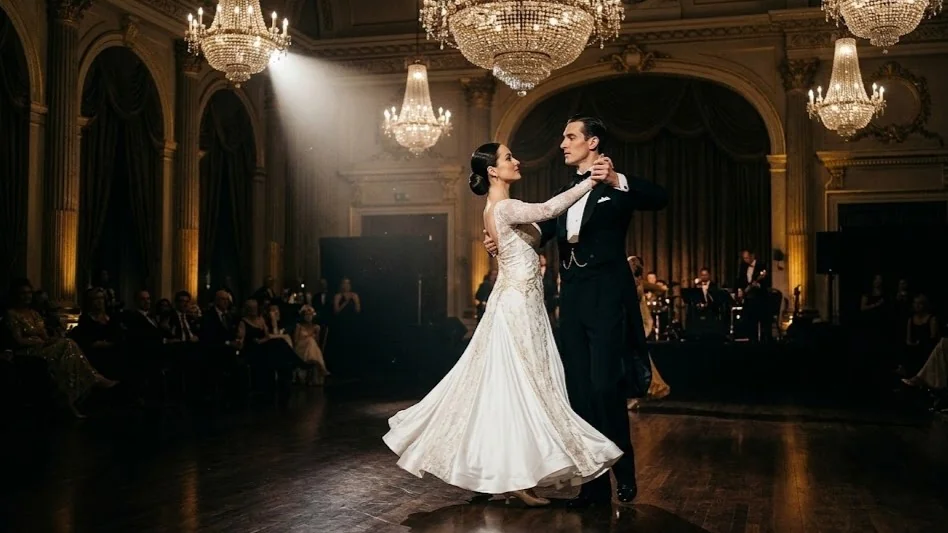
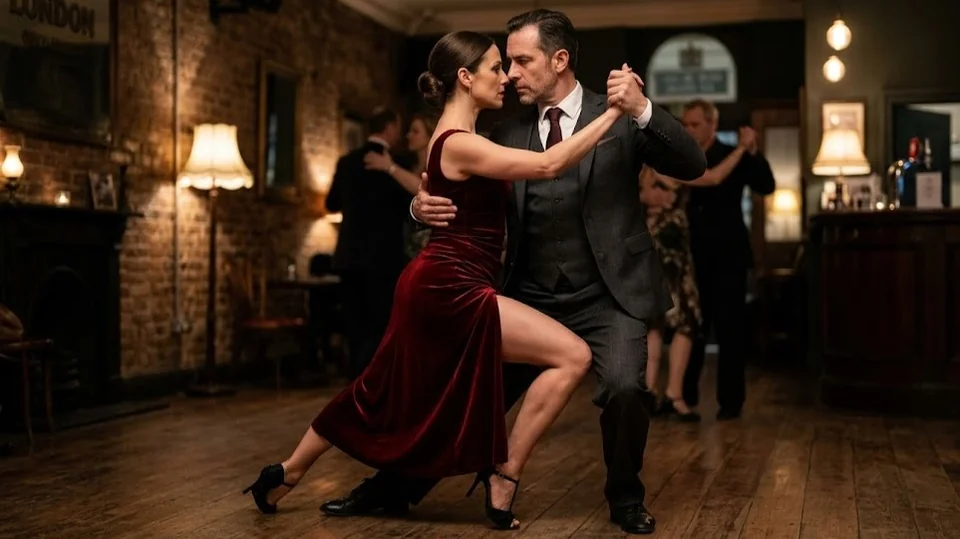
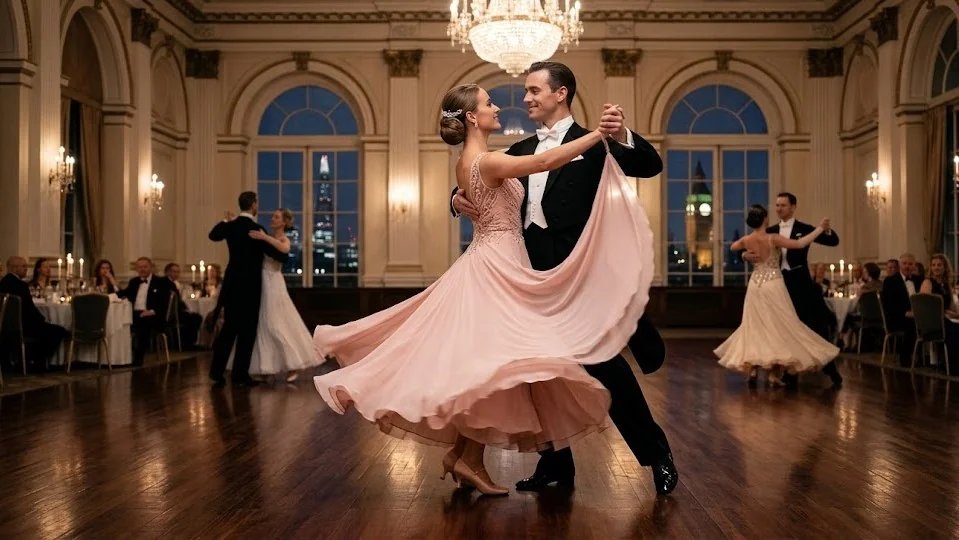
Tango, in its ballroom or "International Standard" form, is one of the five official standard ballroom dances — a dramatic, staccato partner dance taught as part of the standard syllabus at ballroom academies across London.
Tango originated in the working-class neighbourhoods of Buenos Aires and Montevideo in the late nineteenth century, blending influences from African candombe, European polka and Cuban habanera into a uniquely expressive partner dance. By around 1915 it had already become a social sensation across Europe.
This guide covers ballroom (International Standard) tango, one of the five dances in the competitive Standard syllabus alongside waltz, foxtrot and quickstep. If you're looking for the original Argentine social dance — the close-embrace, improvised style that most standalone "tango schools" in London actually teach — see our dedicated Argentine Tango guide.
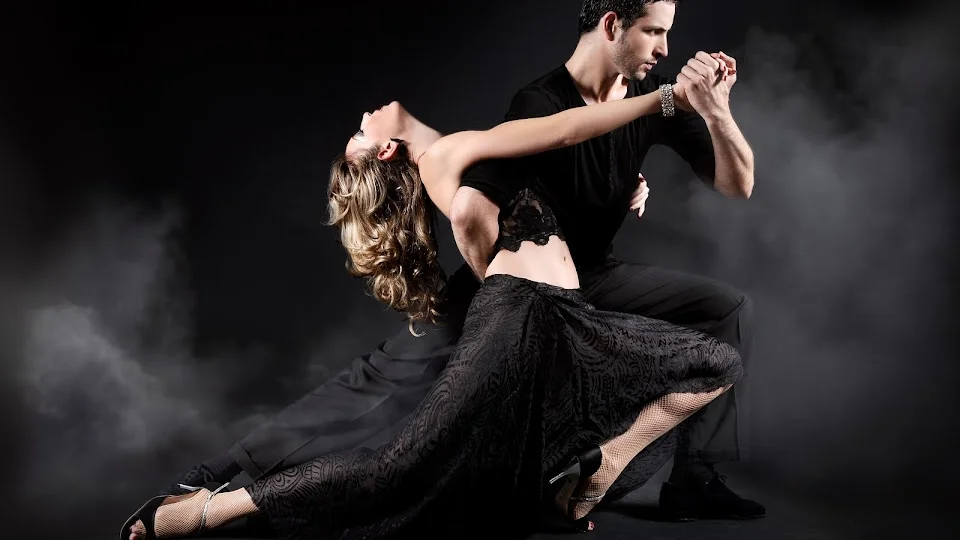
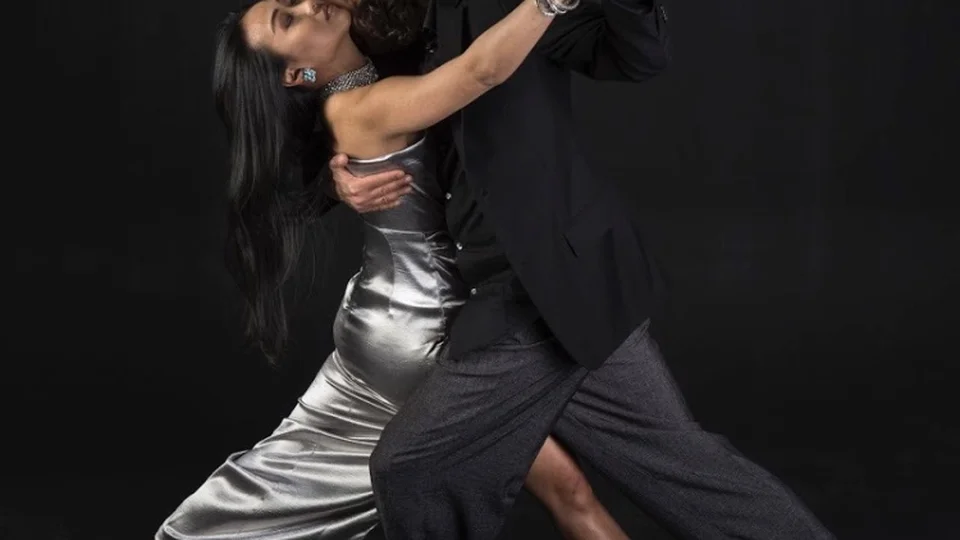
The style split in two directions from there. Argentine tango kept its close embrace, improvised walking and subtle lead-follow connection. Ballroom tango was codified in the 1930s by English dance teachers (with German input) into a fixed, counted technique for competition — a back-leaning frame, staccato "Slow-Slow-Quick-Quick-Slow" timing and sharp head movements that give it a very different character from its Argentine parent.
In practice, this means most schools in London that call themselves a "tango school" teach the Argentine style — it's ballroom academies, not dedicated tango studios, that teach this competitive ballroom version, folding it into their standard syllabus alongside waltz, foxtrot and quickstep.
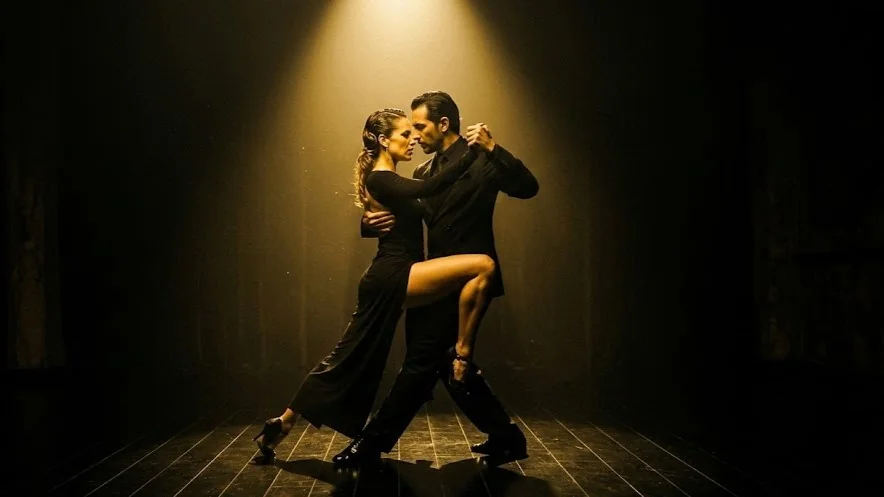
Ballroom tango and Argentine tango share a common root in 1880s Buenos Aires, but a 1930s codification for European competition split them into two genuinely different dances — and in London, they are almost always taught at different types of school.
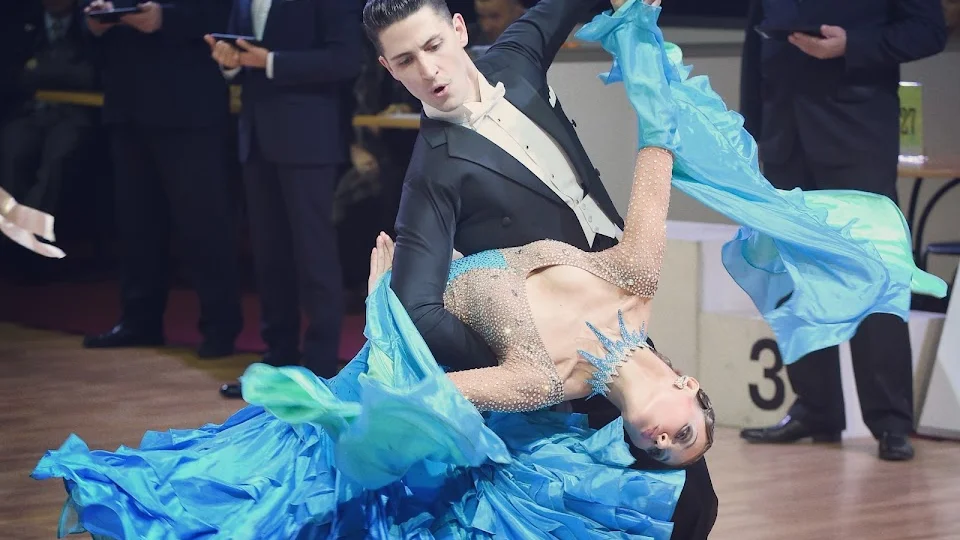
Use the map below to find studios near you, or filter by area and audience to jump straight to our curated list of the best-rated Tango studios in London further down the page.
Trial Available
Tango, Argentine Tango
Trial Available
Tango, Argentine Tango
Tango, Ballet, Commercial & 18 more styles
Trial Available
Tango, Argentine Tango
Tango, Hip Hop, Ballet & 1 more style
Tango, Salsa, Bachata & 3 more styles
Trial Available
Tango, Ballroom, Latin Dance & 6 more styles
Tango, Flamenco, Salsa
Tango, Waltz, Salsa & 4 more styles
Tango, Argentine Tango
Trial Available
Tango, Reggaeton, Latin Dance & 19 more styles
Tango, Argentine Tango
Trial Available
Tango, Argentine Tango
Tango, Ballroom, Contemporary & 10 more styles
Trial Available
Tango, Ballet, Jazz & 8 more styles
Trial Available
Tango, Ballroom, Latin Dance & 16 more styles
Tango, Waltz, Foxtrot & 7 more styles
Tango, Salsa, Zumba & 3 more styles
Tango, Ballroom, Waltz & 18 more styles
Trial Available
Tango, Ballroom, Cha Cha & 7 more styles
Tango, Salsa, Bachata & 4 more styles
Trial Available
Tango, Salsa, Bachata & 1 more style
Tango, Salsa, Bachata & 3 more styles
Tango, Argentine Tango
Tango, Hip Hop, K Pop & 18 more styles
Tango, Argentine Tango
Tango, Contemporary, Argentine Tango
Trial Available
Tango, Ballroom, Waltz & 10 more styles
Tango, Argentine Tango
Tango, Ballroom, Salsa & 7 more styles
Trial Available
Tango, Salsa, Bachata & 2 more styles
Tango, Contemporary, Argentine Tango
Trial Available
Tango, Ballroom, Latin Dance & 3 more styles
Tango, Ballroom, Salsa & 1 more style
Trial Available
Tango, Ballroom, Latin Dance & 11 more styles
Tango, Salsa, Bachata & 5 more styles
Tango, Ballroom, Zumba & 13 more styles
Trial Available
Tango, Ballroom, Waltz & 8 more styles
Tango, Ballroom, Waltz & 10 more styles
Tango, Salsa, Bachata & 3 more styles
Tango, Ballroom, Latin Dance & 9 more styles
Tango, Ballroom, Ballet & 2 more styles
Tango, Ballroom, Jive & 2 more styles
Trial Available
Tango, Ballroom, Jive & 8 more styles
Ballroom tango's back-leaning hold and sharp head movements demand — and build — a level of postural control and presence beyond even the other standard dances.
The fixed Slow-Slow-Quick-Quick-Slow staccato rhythm trains precise musical timing, a skill that sharpens every other standard dance you learn alongside it.
Tango's sharp direction changes demand exceptionally clear lead-follow communication, making it valuable training even for dancers focused mainly on waltz or foxtrot.
Compared to the smooth, gliding quality of waltz or foxtrot, tango's staccato, on-the-spot character gives standard ballroom training some genuine intensity and drama.
Tango's theatrical character makes it a favourite for showcases and competition, building stage presence and composure under pressure.
Learning tango alongside waltz, foxtrot, quickstep and Viennese waltz gives you the full International Standard programme rather than an isolated dance.
Ballroom tango is normally introduced within a general ballroom beginner programme, alongside waltz and foxtrot — no partner or prior experience is expected to start.
Adult students often add tango to their ballroom training specifically for its more dramatic, dynamic character compared to the smoother standard dances.
For dancers already training in waltz or foxtrot, tango is a natural next addition to complete the International Standard repertoire.
Tango is one of the five official Standard dances, making it essential training for anyone pursuing competitive ballroom.
Some students start with ballroom tango at a general dance academy before exploring the very different, improvised Argentine style — it's worth knowing the two are quite distinct before you pick a class.
Tango's sharper, more energetic footwork gives standard ballroom training a noticeably more dynamic pace than the smoother dances in the syllabus.
London has a rich tango scene overall, but it is worth understanding how it is organised: dedicated tango schools and the milongas (tango social dance events) running weekly across the city almost all teach the Argentine style. Ballroom tango, by contrast, lives inside general ballroom academies, taught as part of the standard competitive syllabus set out by bodies such as the ISTD — whose Ballroom Branch, founded in London in 1904, still governs the technique used today.
Flow Dance Nine Elms teaches tango explicitly as one of the five dances in "the standardised syllabus for International Ballroom", alongside instructors with national and international competition titles. At Zoltan's Ballroom and Latin Dancing Lessons, founder Zoltan Szalontay — a graduate of the Hungarian Dance Academy with three World and European formation-team medals — teaches tango within a full Standard and Latin programme. Arthur Murray Dance Studios, part of a franchise dating back to 1912, describes its tango classes as capturing "the dramatic strength and romance" of the partnership, and Dancebuzz teaches tango alongside waltz and cha-cha within its social ballroom programme.
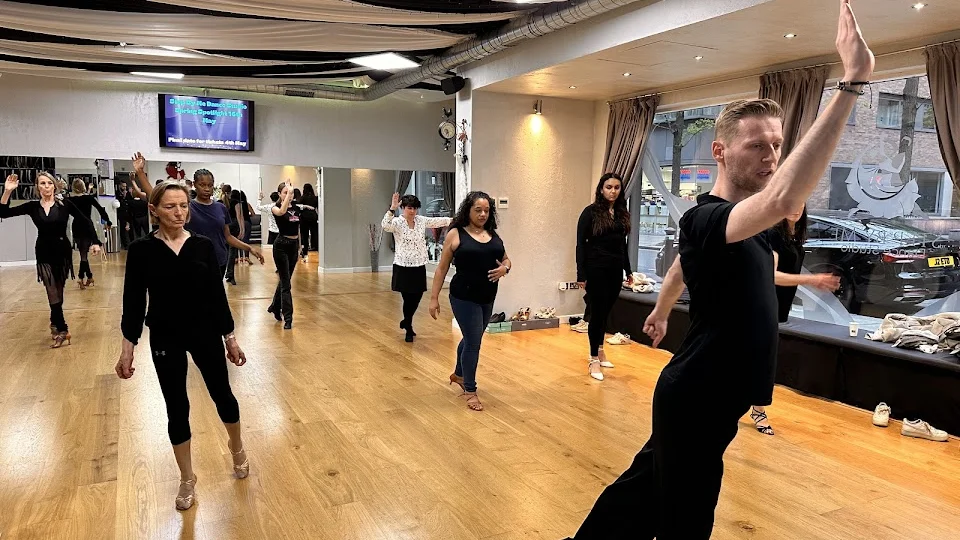
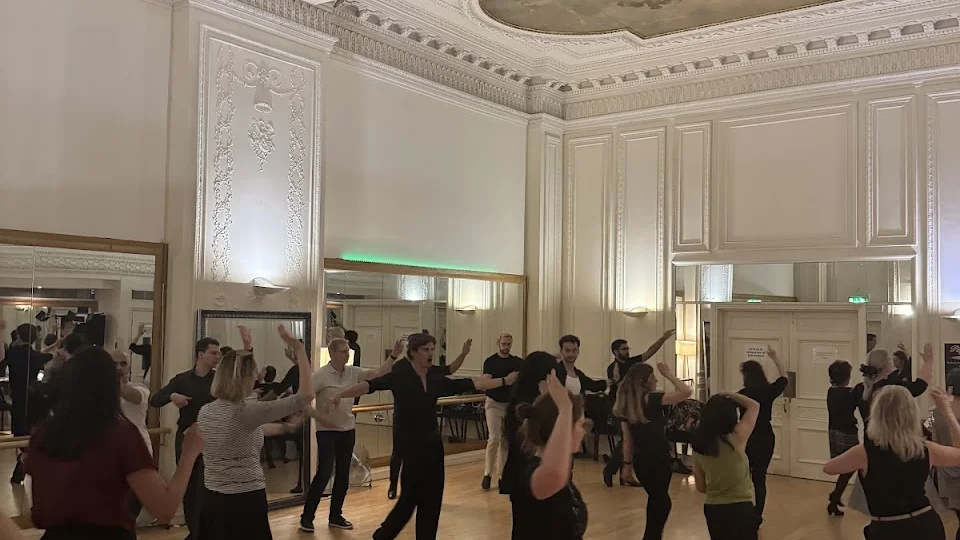
Ballroom tango classes in London are usually taught within a general Standard ballroom programme rather than as a standalone class — most schools introduce it once students have some grounding in waltz or foxtrot.
Classes progress from basic frame, walk and the staccato timing pattern through to the full figures used in Bronze, Silver and Gold syllabus levels.
The same general ballroom dress code applies: smart-casual clothing that allows free movement, with suede-soled ballroom shoes recommended once you're training regularly — tango's sharp direction changes and staccato steps make good pivoting shoes especially useful.
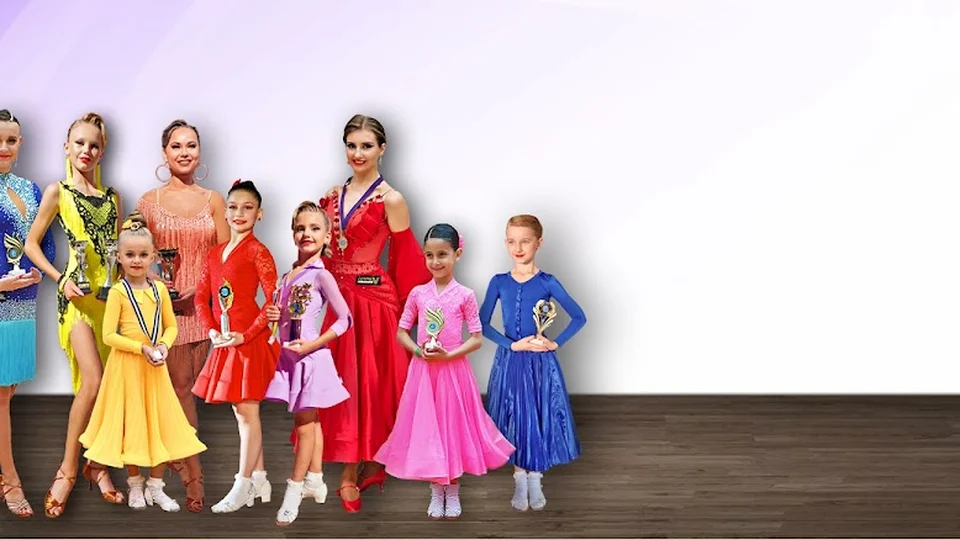
For competition or showcase work, tango's dramatic character is often reflected in more striking costume choices than the softer standard dances, though everyday class only requires standard practice wear.
Next Step
Explore our curated guide to London's best dance studios — filtered by style, area and level.
Browse Dance Studios in London