Latin Romance
Rumba
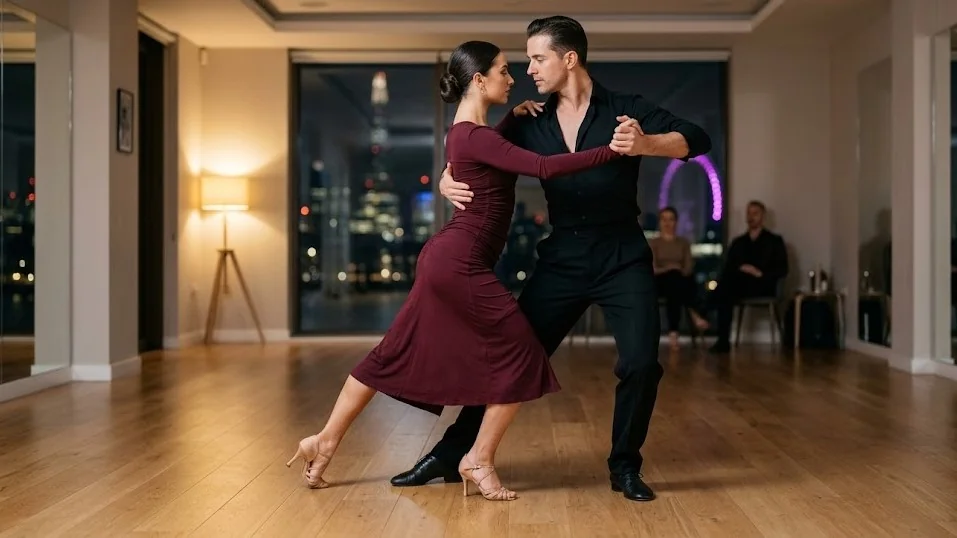
Rumba is the slowest and most romantic of the International Latin dances — often called "the dance of love" for the way it narrates a courtship between partners through slow, expressive movement.
Rumba is the slowest and most romantic of the International Latin dances — often called "the dance of love" for the way it narrates a courtship between partners through slow, expressive movement.
Ballroom rumba descends from the Cuban "son" — itself a calmer, more formalised cousin of the energetic Afro-Cuban street rumba (with its Yambú, Guaguancó and Columbia styles). The ballroom version was introduced to European competition by English teacher Pierre Lavelle and standardised in the mid-1950s, making today's competitive rumba a distinct, much slower and more formal dance than its Cuban social namesake.
The dance's wider popularity owes a great deal to "El Manisero" (The Peanut Vendor), recorded by Cuban bandleader Don Azpiazú in 1930 — the first Latin American song to sell a million copies in the United States, which helped carry Cuban rhythms into mainstream ballroom culture.
One of the five International Latin ballroom dances, rumba is characterised by slow, continuous hip movement ("Cuban motion"), intricate footwork and a strong emphasis on the romantic connection between partners — its narrative, flirtatious quality is what earns it the "dance of love" label within the Latin programme.
Rumba and cha-cha share Cuban roots and the same family of hip movement, but their character is almost opposite — one slow and romantic, the other sharp and playful.
Use the map below to find studios near you, or filter by area and audience to jump straight to our curated list of the best-rated Rumba studios in London further down the page.
Rumba, Salsa
Rumba, Waltz, Salsa & 4 more styles
Rumba, Zumba, Salsa & 6 more styles
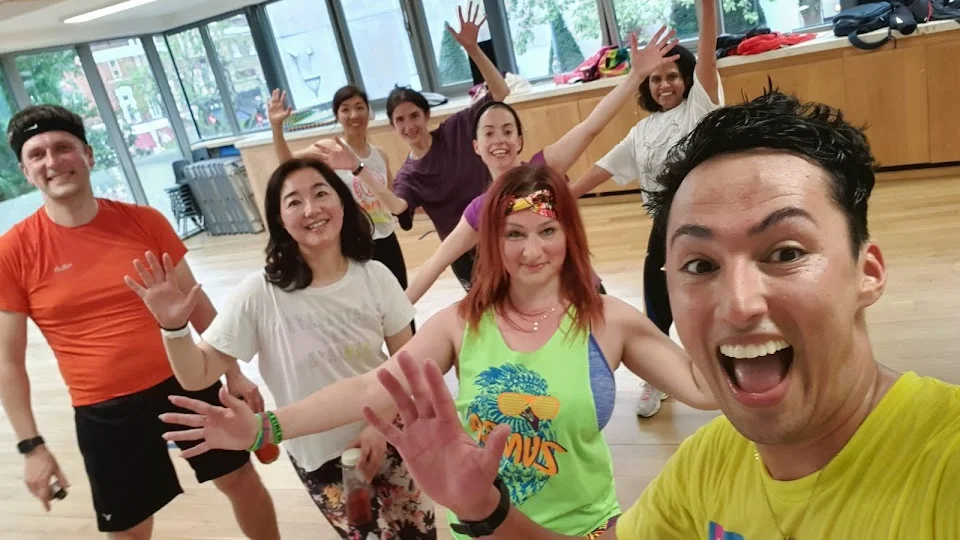
Rumba, Zumba
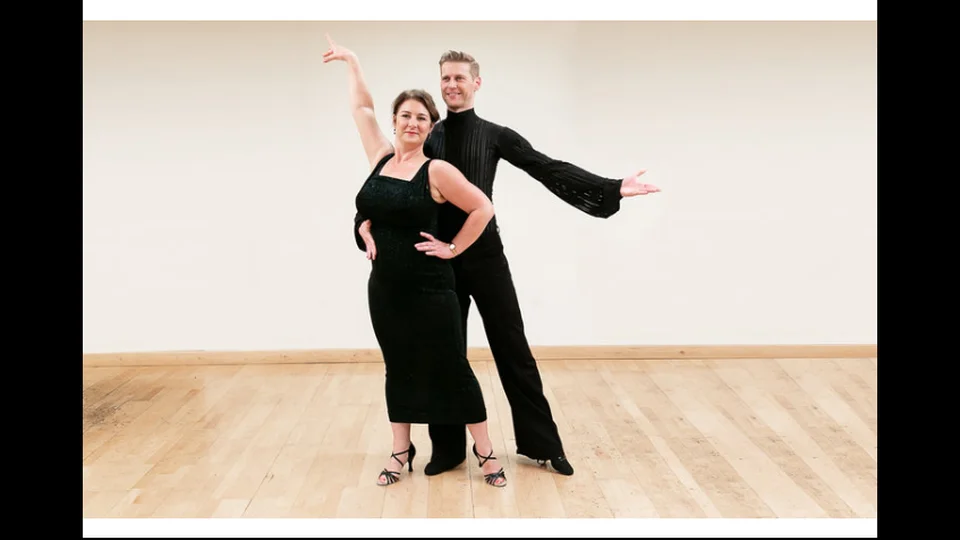 Trial Available
Rumba, Ballroom, Latin Dance & 16 more styles
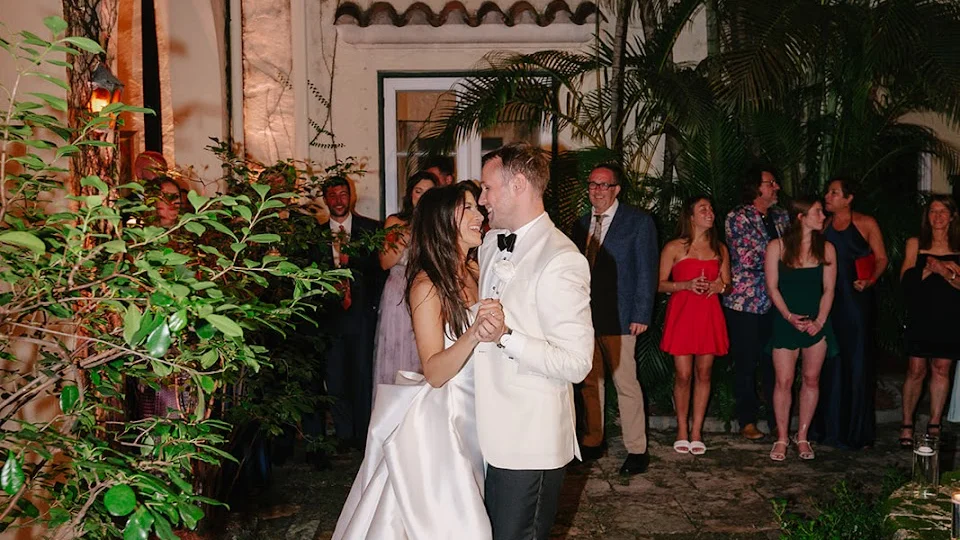
Rumba, Waltz, Foxtrot & 7 more styles
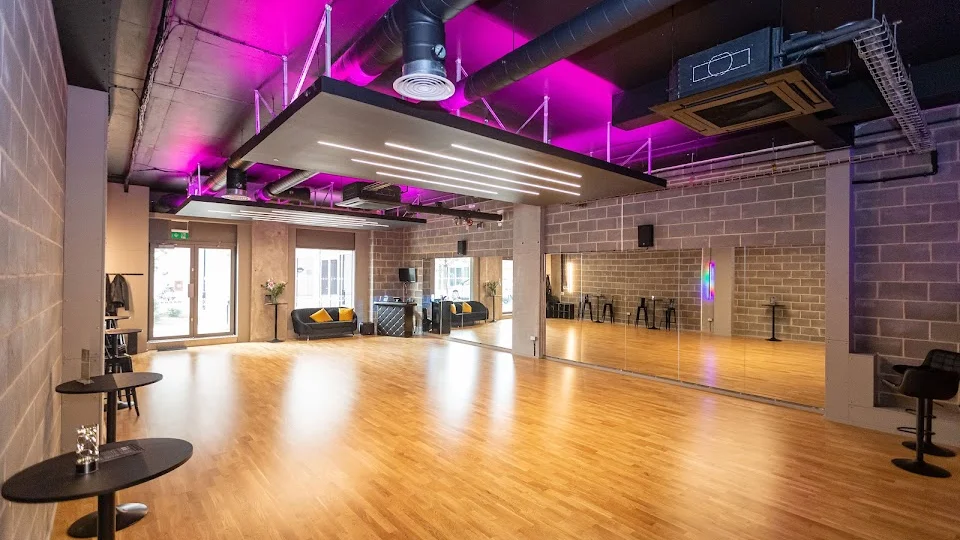
Rumba, Ballroom, Waltz & 18 more styles
 Trial Available
Rumba, Ballroom, Salsa & 4 more styles
 Trial Available
Rumba, Ballroom, Waltz & 10 more styles
Rumba, Zumba
 Trial Available
Rumba, Ballroom, Latin Dance & 11 more styles
 Trial Available
Rumba, Ballroom, Jive & 8 more styles
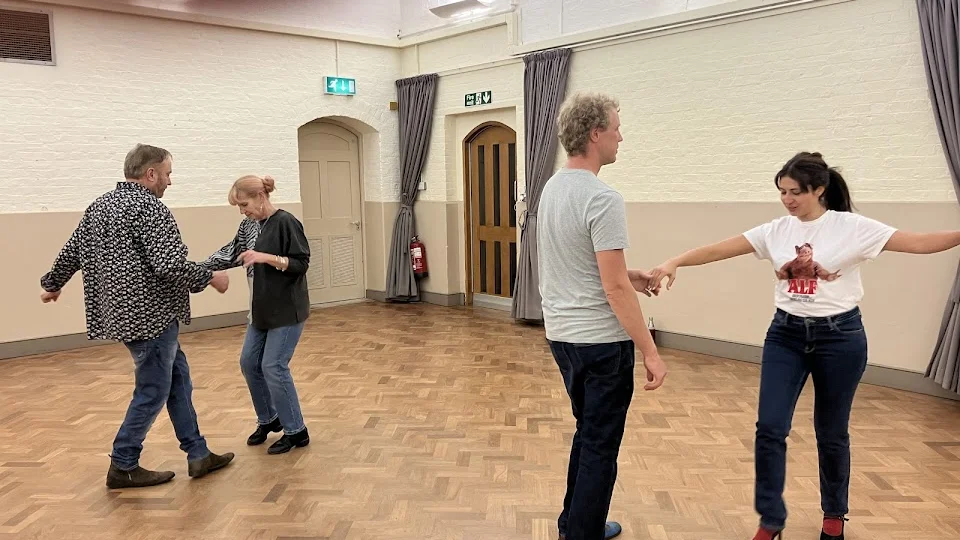
Rumba, Ballroom, Zumba & 13 more styles
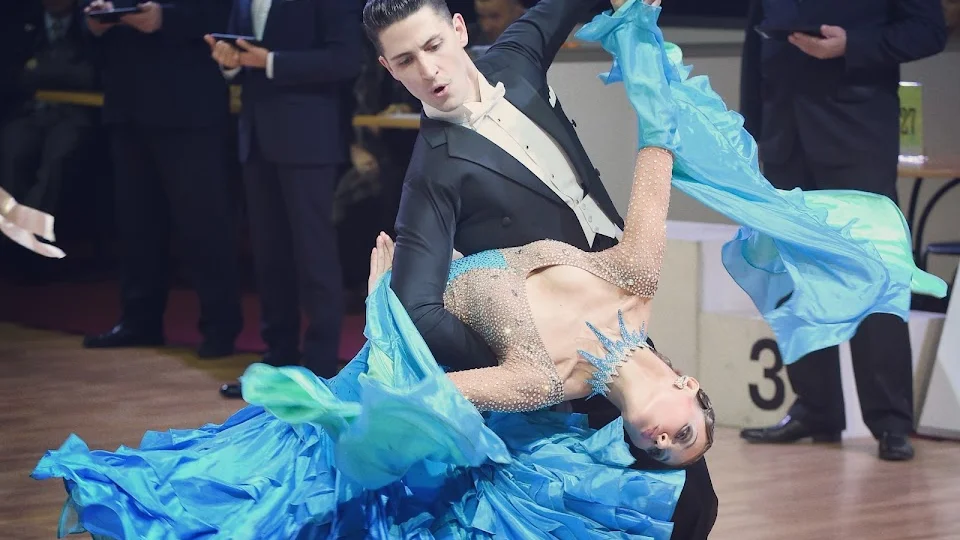 Trial Available
Rumba, Ballroom, Waltz & 8 more styles
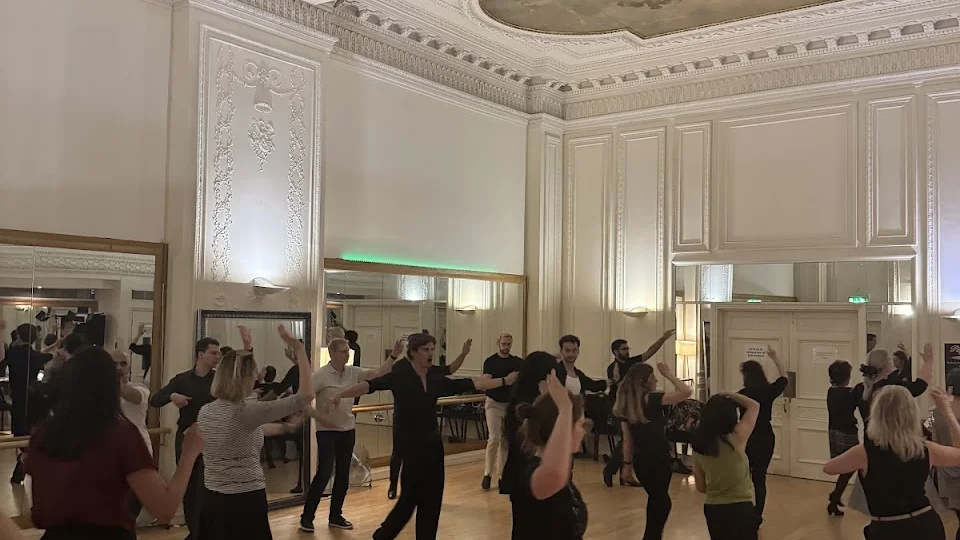
Rumba, Ballroom, Waltz & 10 more styles
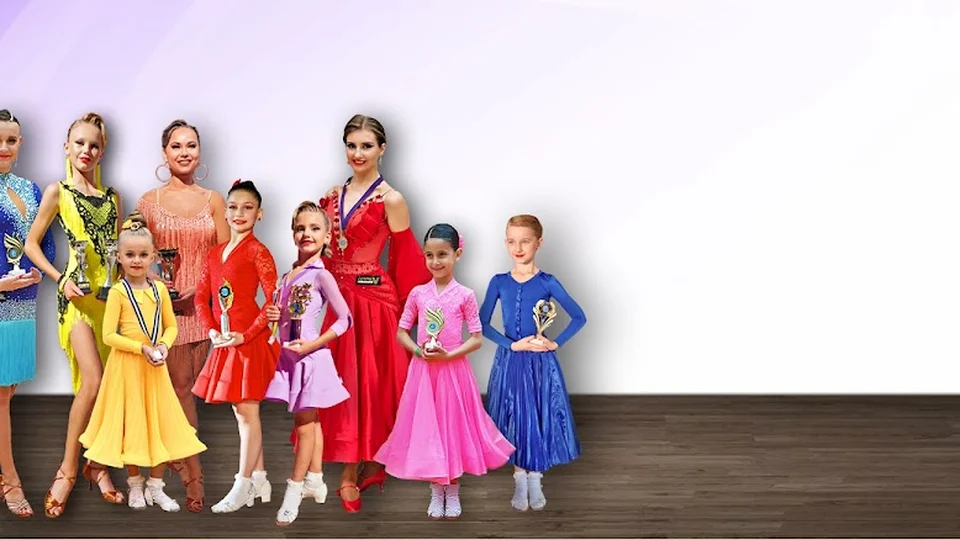
Rumba, Ballroom, Latin Dance & 9 more styles
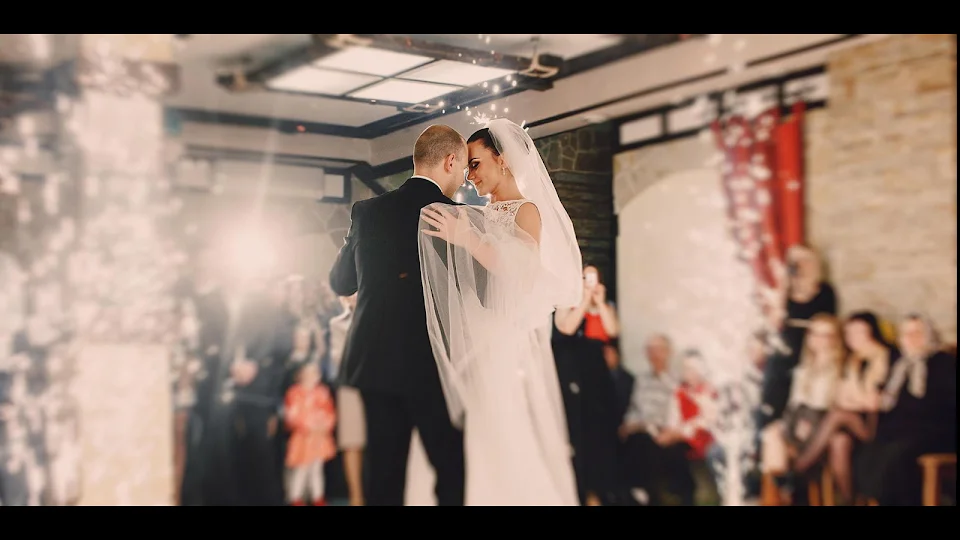
Rumba, Ballroom, Tango & 4 more styles
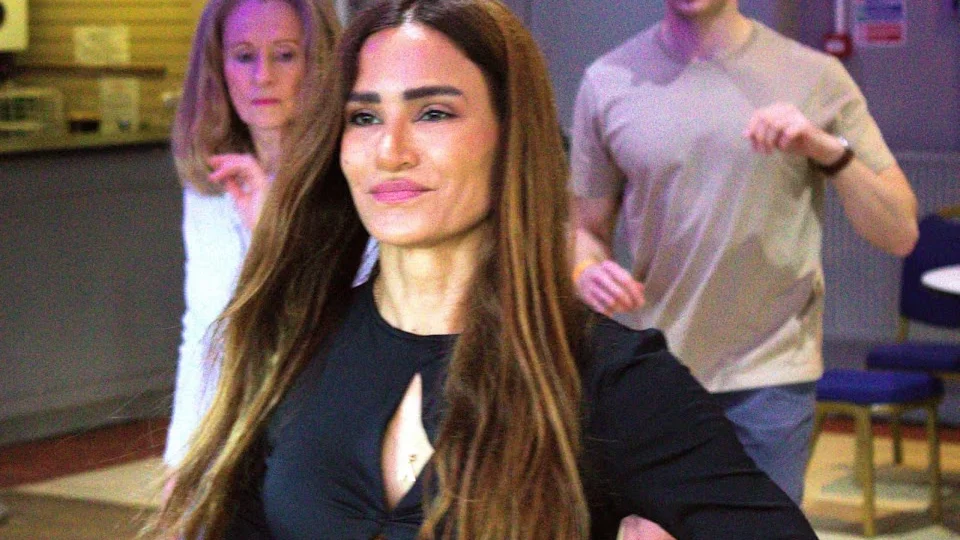 Trial Available
Rumba, Latin Dance, Ballet & 6 more styles
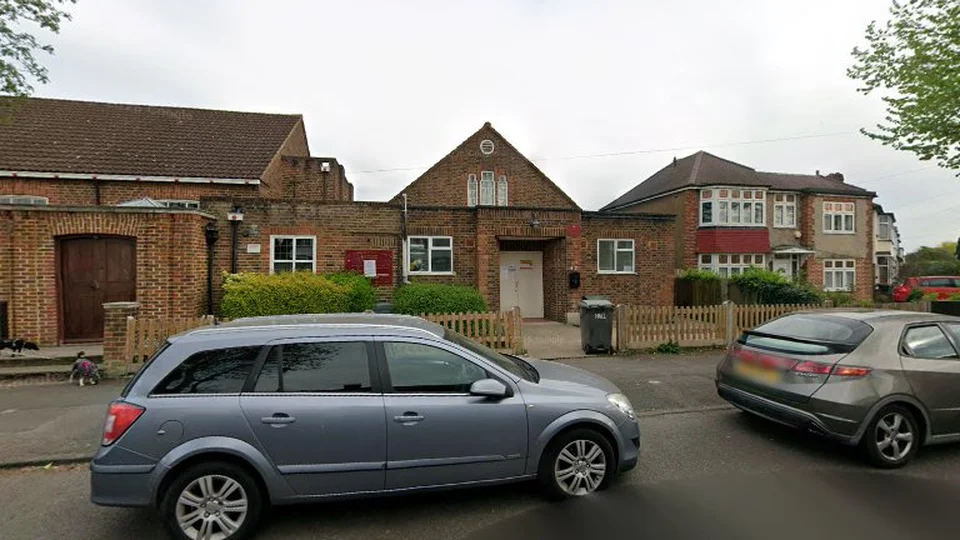
Rumba, Cha Cha, Ballroom & 7 more styles
Rumba, Ballroom, Tango & 4 more styles
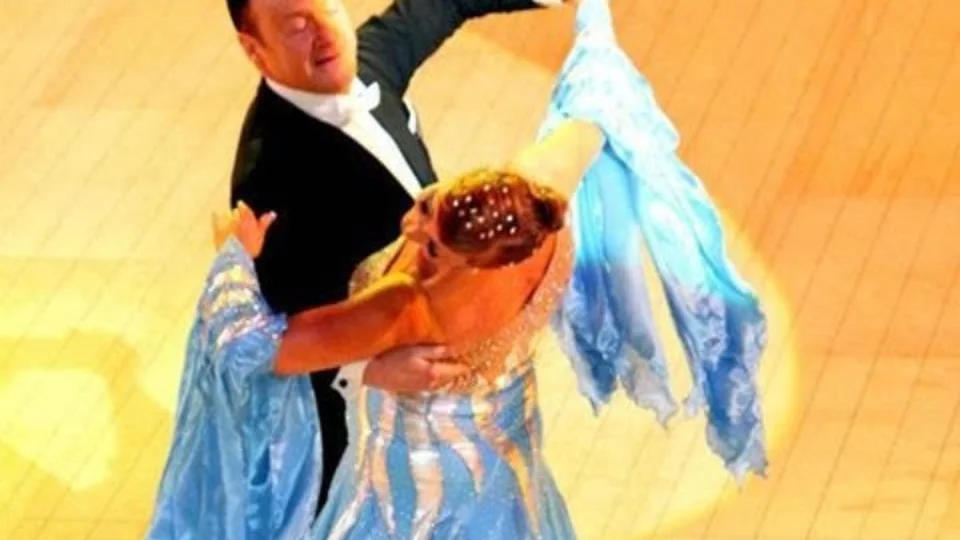
Rumba, Waltz, Samba & 8 more styles
Rumba is built around a narrative of courtship between partners, making it one of the most direct ways to develop genuine expressive connection in a dance.
The continuous "Cuban motion" hip action trains real control and mobility through the hips and core, distinct from the sharper, more staccato movement of cha-cha.
Because rumba moves slowly, it leaves space to develop genuine musical interpretation and characterisation rather than just executing steps.
The slow tempo makes rumba one of the gentlest Latin dances physically, while still building real strength and control through sustained, controlled movement.
Rumba's emphasis on romantic, expressive movement helps build a specific kind of performance confidence that faster, more technical dances don't develop in the same way.
Because it's danced slowly, rumba is often used to teach the fundamentals of Cuban hip motion that carry over into cha-cha, samba and the rest of the Latin programme.
Rumba's slow tempo makes it one of the most commonly recommended starting points for Latin dance — beginner classes focus on correct hip action and timing before adding figures.
Rumba is a popular adult class format in London, valued for its romantic, expressive character compared to the faster Latin dances.
The connection-focused, narrative quality of rumba makes it a popular choice for couples looking for a shared, romantic dance hobby.
For dancers more interested in musicality and characterisation than speed or athleticism, rumba rewards that focus directly.
The continuous hip and core engagement gives a genuine, low-impact workout for dancers who want mobility training over high intensity.
Rumba is one of the five official Latin dances, making it essential training for anyone pursuing competitive Latin ballroom.
Rumba is widely taught at ballroom and Latin dance studios across London. As the slowest of the Latin dances it is often recommended for beginners as a way to develop hip movement and partner connection.
Zoltan's Ballroom and Latin, led by former Hungarian formation-team champion Zoltan Szalontay, teaches rumba within its full Latin programme from its Victoria studio. Flow Dance Nine Elms distinguishes "American Rumba" explicitly within its style carousel, alongside a Pro-Am squad training for national and international competition. Arthur Murray Dance Studios, part of a franchise dating back to 1912, teaches rumba as part of its century-old Baker Street syllabus.
Rumba classes in London are part of standard Latin dance programmes at most ballroom studios. The emphasis in beginner classes is on the correct hip action and timing before progressing to figures and turns.
The romantic quality of the dance makes it popular for social dancing as well as competition.
Fitted, stretchy clothing that shows your hip and leg lines clearly works best — leggings or a fitted skirt with a fitted top. Latin dance shoes with some heel are common for women once training regularly, as they help engage the correct hip action; men typically wear a smart shoe with a slight heel and suede sole.
Because rumba is danced slowly and close, comfort and freedom of movement matter more than in the faster Latin dances — avoid anything restrictive around the hips.
Next Step
Explore our curated guide to London's best dance studios — filtered by style, area and level.
Browse Dance Studios in London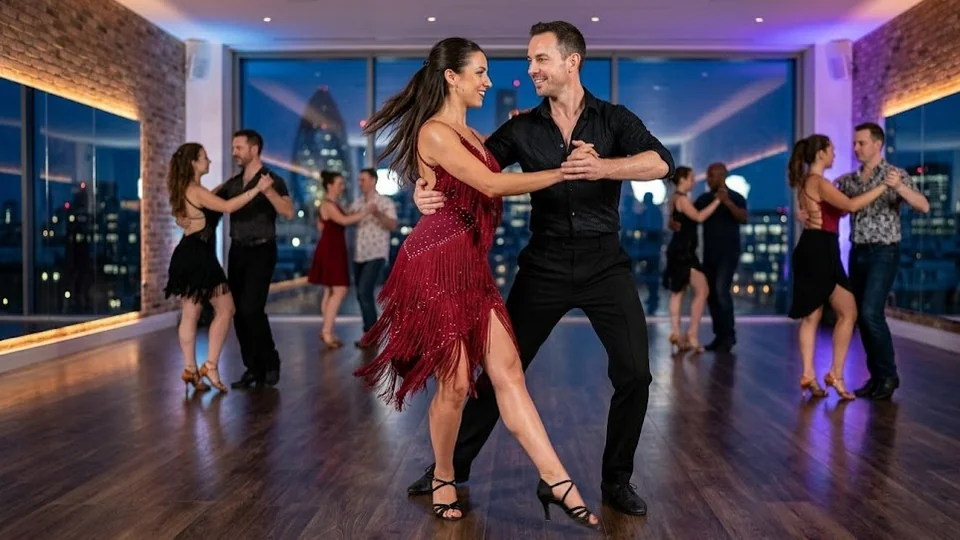 Cha Cha
  Paso Doble
  Samba (Ballroom)
  Jive
Jive