Afro-Brazilian Art
Capoeira
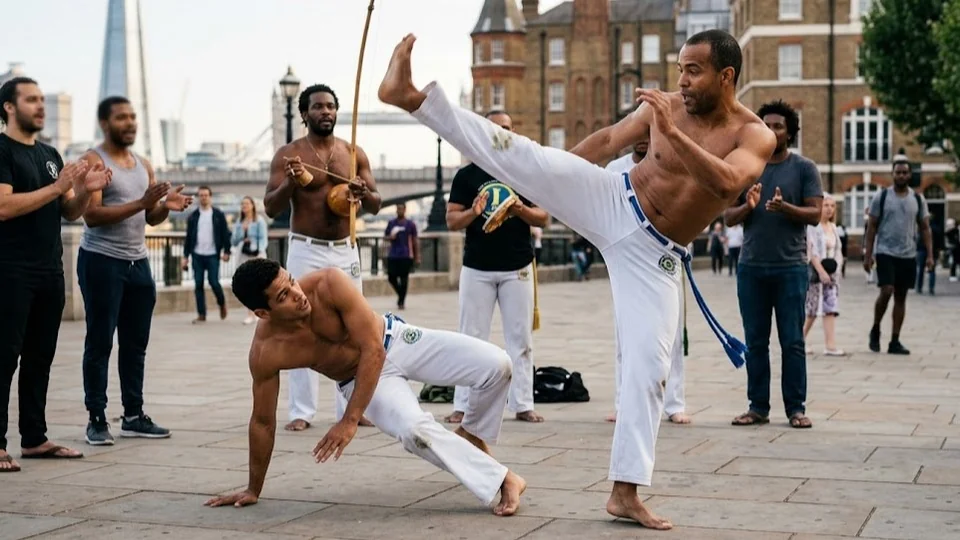
Capoeira is a uniquely Brazilian art form that blends martial arts, acrobatics, dance and music into a fluid, playful and deeply cultural practice rooted in the history of African resistance in Brazil.
Capoeira is a uniquely Brazilian art form that blends martial arts, acrobatics, dance and music into a fluid, playful and deeply cultural practice rooted in the history of African resistance in Brazil.
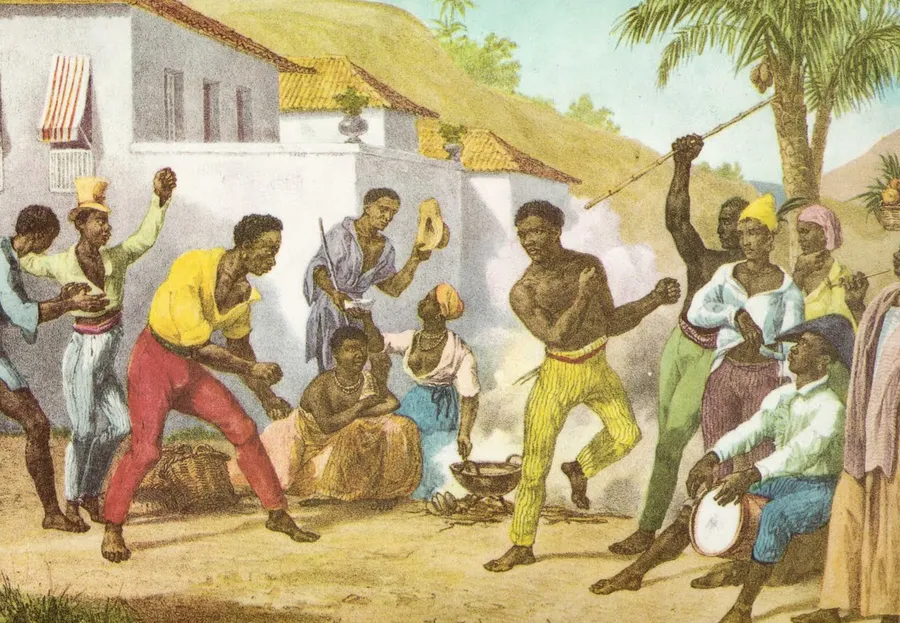
Capoeira was developed, probably from the sixteenth century onward, by enslaved Africans in Brazil — with roots traced to the Mbundu people of the Kingdom of Ndongo in present-day Angola — who disguised their martial practice as dance and play. The earliest documented reference dates to 1789. In 2014, UNESCO added the "capoeira circle" to its Representative List of the Intangible Cultural Heritage of Humanity, formal recognition of its cultural significance.
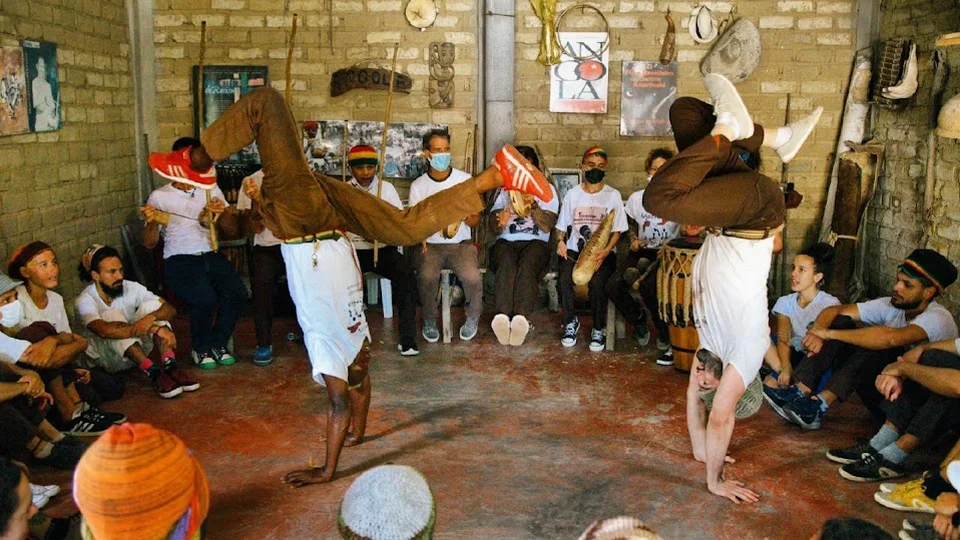
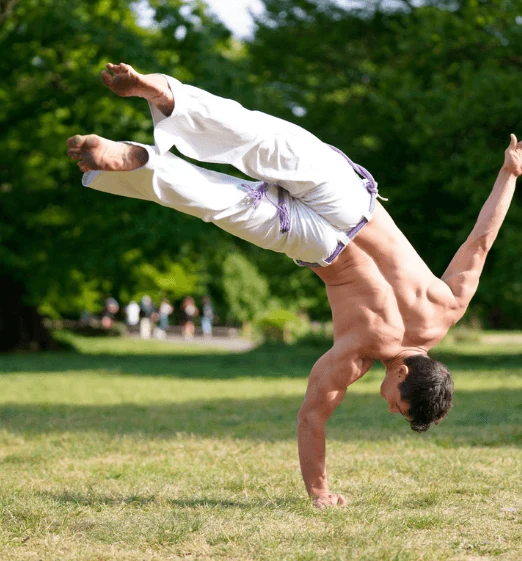
It combines flowing acrobatic movement, kicks, sweeps and evasions performed in dialogue with an opponent within a ritual circle (the roda), accompanied by live music including the berimbau, atabaque and pandeiro.
The two main styles are Capoeira Angola — the older, more traditional, ground-level style associated with Mestre Pastinha — and Capoeira Regional, created by Mestre Bimba, which is faster and more acrobatic, with its own belt-like ranking system (cordões). Both are practiced in London with strong communities around each tradition.
Capoeira and breakdance developed independently — a century and an ocean apart — but share a striking real parallel: both are acrobatic, circle-based practices built around a game-like exchange between performers, rather than fixed choreography.
Use the map below to find studios near you, or filter by area and audience to jump straight to our curated list of the best-rated Capoeira studios in London further down the page.
 Trial Available
Capoeira
Capoeira
 Trial Available
Capoeira
Capoeira
Capoeira
Capoeira
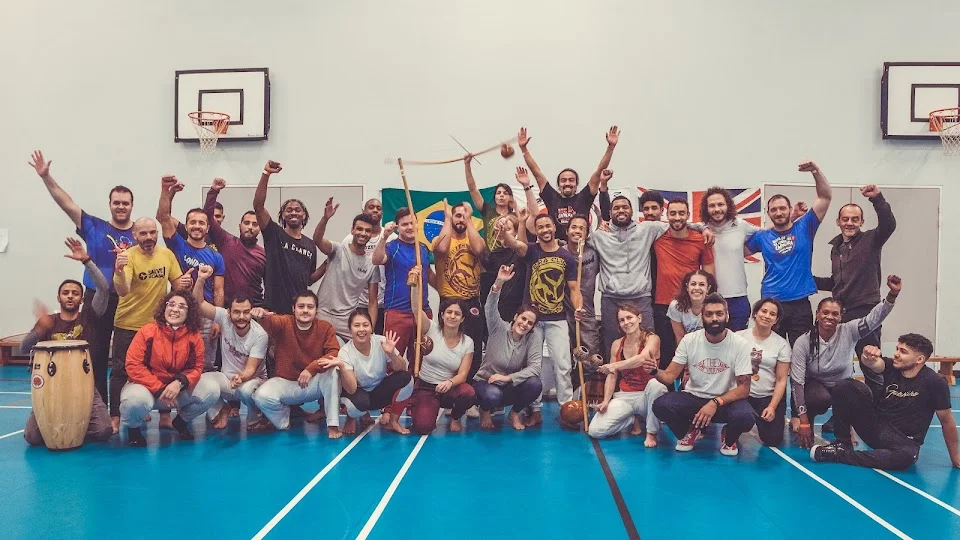
Capoeira
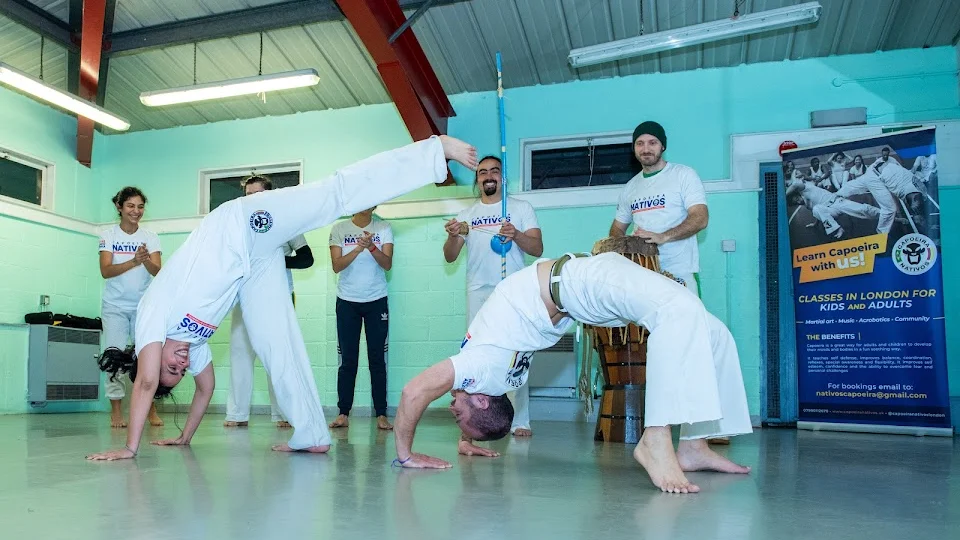
Capoeira
Capoeira
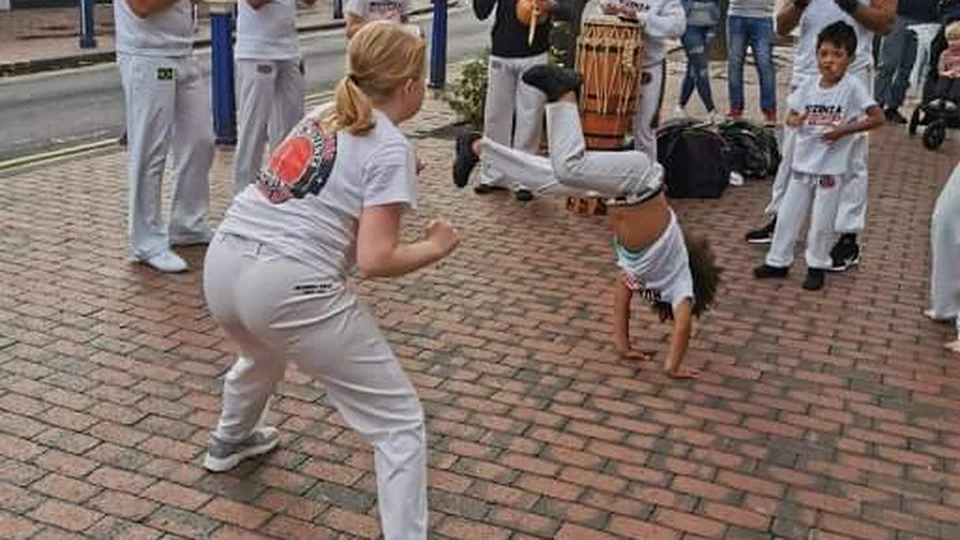
Capoeira
Capoeira
 Trial Available
Capoeira
Capoeira
Capoeira
Capoeira
 Trial Available
Capoeira
 Trial Available
Capoeira
Capoeira, Samba, Contemporary & 3 more styles
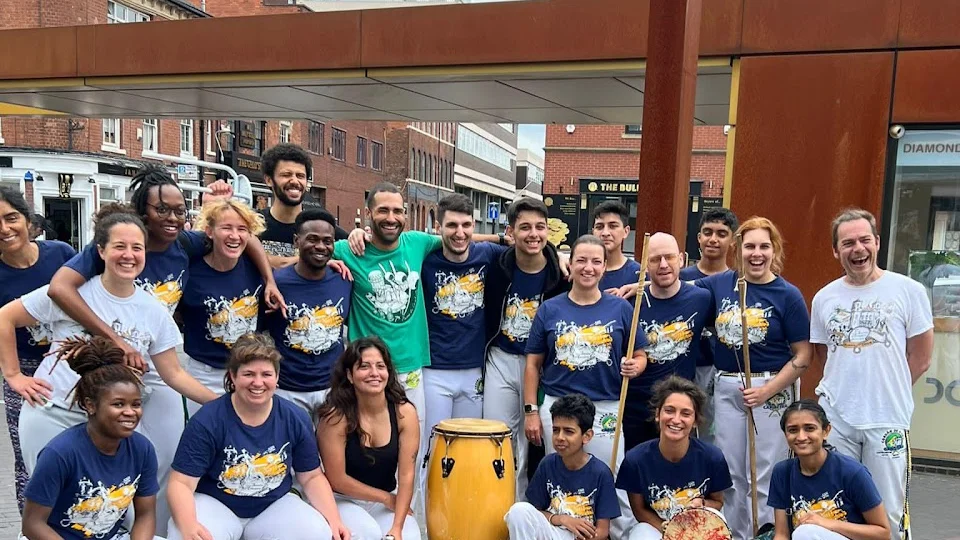 Trial Available
Capoeira, Commercial
 Trial Available
Capoeira
Capoeira
 Trial Available
Capoeira
Capoeira, Ballet, Contemporary
Capoeira, Ballet, Contemporary & 6 more styles
Capoeira's kicks, sweeps and evasions build genuine functional strength and flexibility, closer to martial arts conditioning than a typical dance class.
Live music — berimbau, atabaque and pandeiro — is integral to every class, training a deep, physical sense of rhythm alongside the movement itself.
Because capoeira is a genuine martial art as well as a dance and game, students develop real defensive awareness alongside the physical artistry.
Training is typically conducted partly in Portuguese, with cultural context treated as inseparable from the physical practice — a genuinely immersive way to connect with Afro-Brazilian culture.
The roda is framed as a "jogo" (game) between two players, not a fight — rewarding creativity, wit and playfulness as much as athletic skill.
Progression is marked by community milestones — batizados (graduation ceremonies) and regular rodas — building both technical skill and a strong sense of belonging.
Beginner classes teach the ginga (the fundamental swaying base movement) and basic technique from scratch — no martial arts or dance background is expected.
Capoeira is a popular adult class format in London, valued for combining serious physical training with music, culture and community.
Several London groups run dedicated kids' classes, teaching the physical discipline alongside age-appropriate cultural and musical elements.
Capoeira's combination of martial technique, acrobatics and conditioning appeals strongly to those seeking something more physically demanding than a typical dance class.
Because cultural and musical context is treated as inseparable from the movement, capoeira suits students specifically drawn to Afro-Brazilian history and tradition.
The roda and batizado culture at the heart of capoeira build a genuinely strong sense of community around shared practice and progression.
London has a well-established Capoeira community with multiple groups practicing both Angola and Regional styles. Classes and treinos (training sessions) run weekly across the city, with regular rodas (games) open to practitioners of all levels.
Capoeira Academy UK, led by Professor Bombril, is part of Capoeira Muzenza — described on its own site as one of the largest capoeira organisations in the world — and runs classes for children, adults and private groups alongside educational charity projects. London School of Capoeira Herança describes itself as the first capoeira school established in the UK, offering beginner courses, memberships and studio hire from its North London base. Capoeira Bemvindo Angola teaches specifically in the traditional Angola style, running adult and children's classes with frequent visiting-teacher workshops. Capoeira Nativos London, led by Contramestre Japão (Samir Nunez, 25 years of practice) under the guidance of Mestre Aranha, teaches across three community venues and hosts its own annual festival, Estrela Guia, with batizados, rodas and workshops.
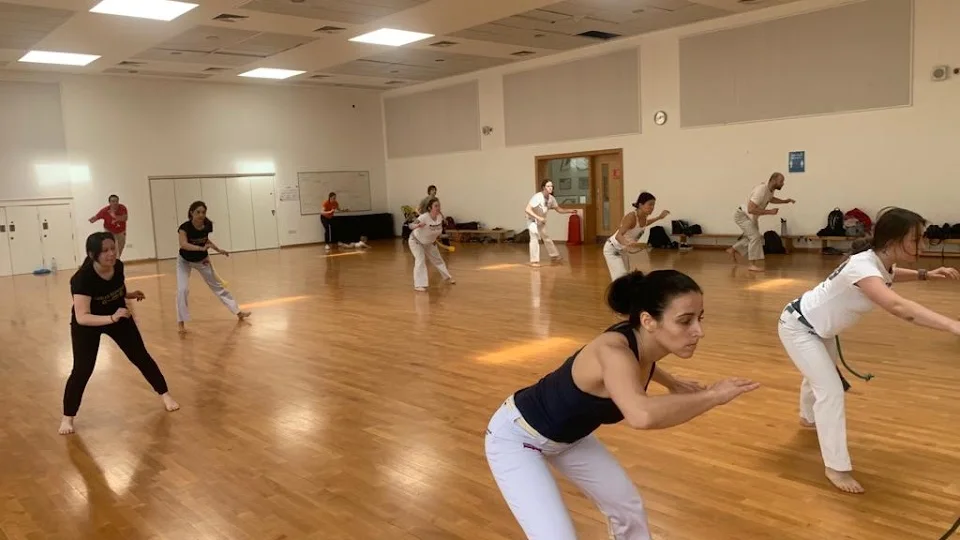
Capoeira classes in London are offered at various studios and community spaces. Beginners learn the ginga (the fundamental swaying base movement), basic attacks and evasions, and the musical instruments alongside the physical practice.
Training is typically conducted partly in Portuguese, and cultural immersion is considered part of the learning process.
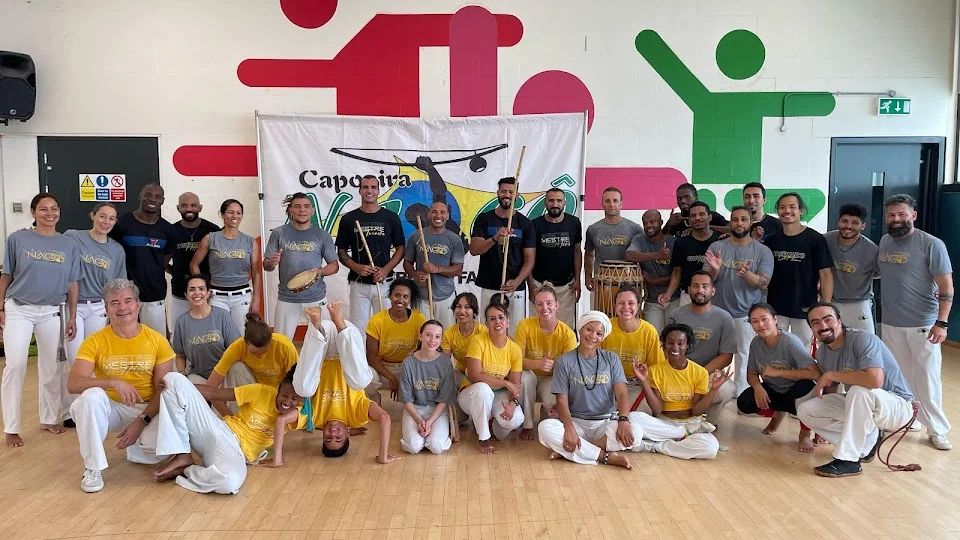
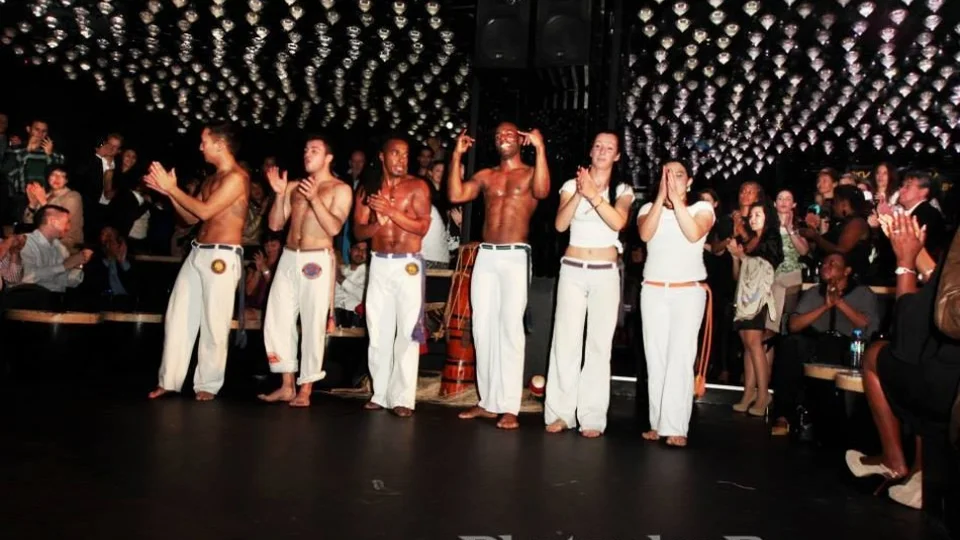
Most groups train in a simple uniform — typically a group T-shirt (often earned or purchased once you join) with loose white or coloured trousers (abadá) — though beginners can usually start in any comfortable, loose sportswear that allows kicks and floor work. Capoeira is traditionally practiced barefoot.
Once you progress, many groups award a corda (cord) worn around the waist marking your level within their own ranking system — ask your instructor when this typically happens in their group.
Next Step
Explore our curated guide to London's best dance studios — filtered by style, area and level.
Browse Dance Studios in London Acro Dance
  African Traditional Dance
  Breakdance
  Samba Brasileiro (Carnaval)