Breaking Culture
Breakdance
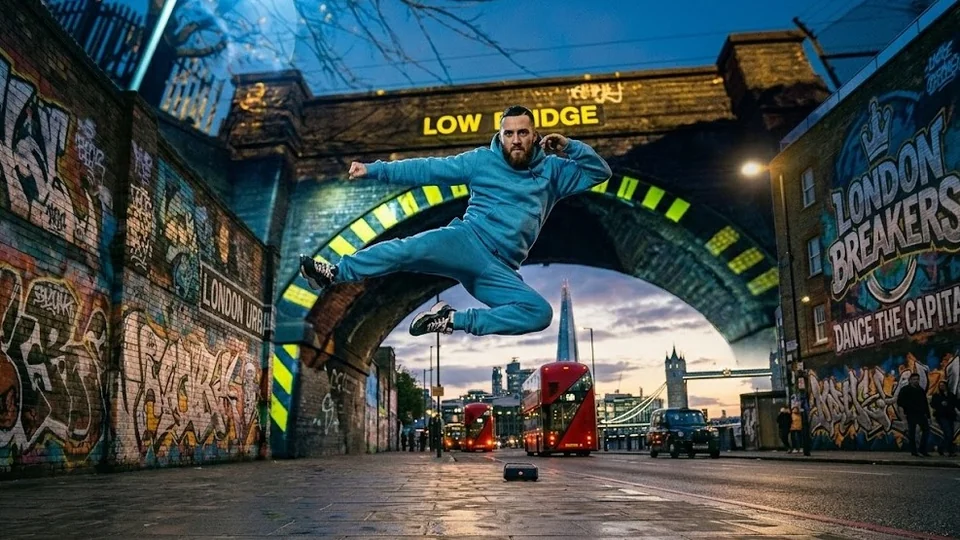
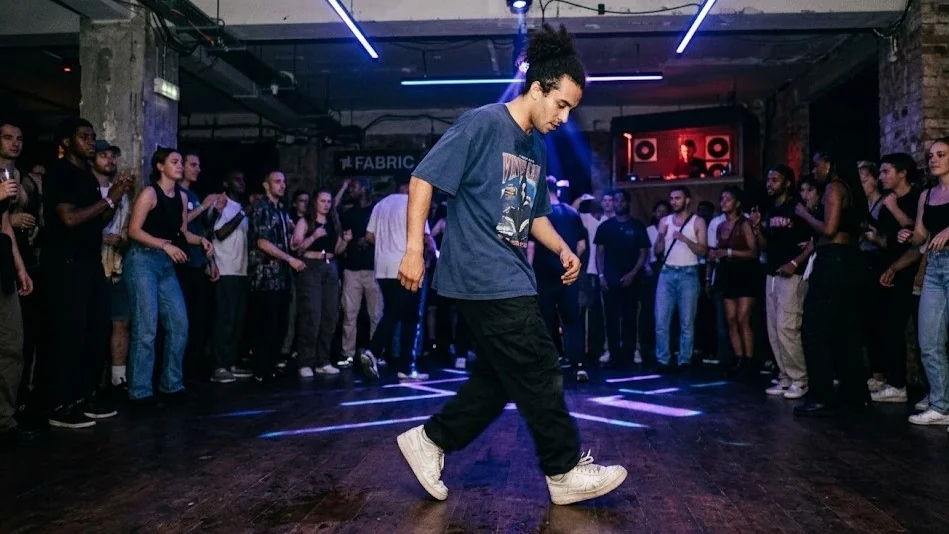
Breakdance — or breaking — is one of London's most technically demanding street dance styles, combining acrobatics, power moves and musical interpretation in a uniquely expressive art form.
Breakdance — or breaking — is one of London's most technically demanding street dance styles, combining acrobatics, power moves and musical interpretation in a uniquely expressive art form.
Breaking originated in the South Bronx, New York, in the early 1970s as part of the emerging hip hop culture. It consists of four core elements: toprock (upright movement), downrock (floorwork), power moves (dynamic spinning and acrobatic moves) and freezes (held positions).
Breaking requires significant physical strength, body control and musical sensitivity. Practitioners — known as B-boys and B-girls — develop their own personal style and freestyle vocabulary over years of training, often within a crew that trains and battles together.
In 2024, breaking made its debut as an Olympic sport at the Paris Games, with Phil Wizard (Canada) and Ami Yuasa (Japan) taking the first gold medals — a landmark moment for the global breaking community, though the sport will not return for Los Angeles 2028.
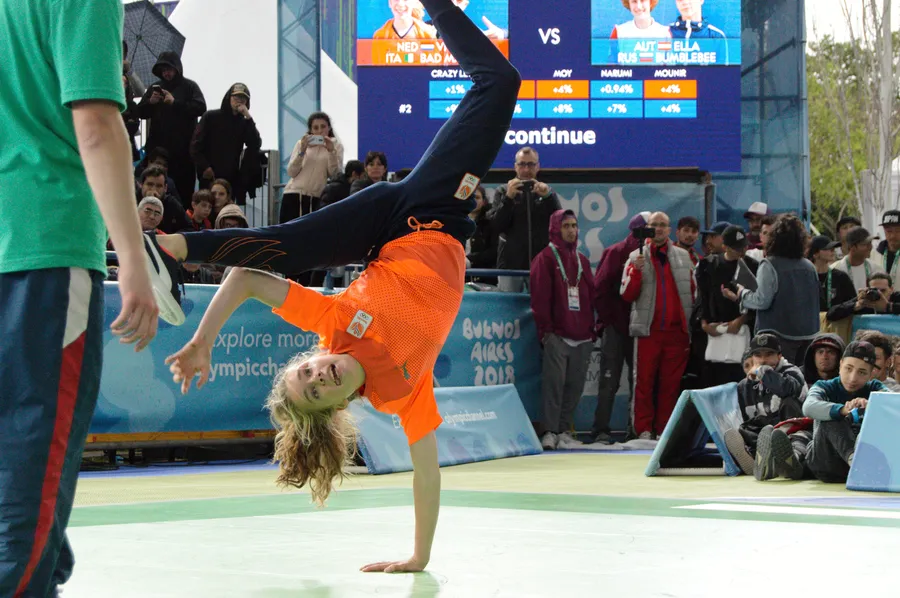
Breaking is one specific, technical discipline within the broader street dance umbrella, with its own distinct culture and vocabulary.
Use the map below to find studios near you, or filter by area and audience to jump straight to our curated list of the best-rated Breakdance studios in London further down the page.
 Trial Available
Breakdance, Street Dance, Contemporary & 1 more style
Breakdance, Forro, Swing & 1 more style
Breakdance, Bollywood
Breakdance, Commercial, Street Dance & 7 more styles

Breakdance, Ballet, Street Dance & 4 more styles
Breakdance, Street Dance, Contemporary & 2 more styles

Breakdance, Street Dance, Hip Hop
 Trial Available
Breakdance, Street Dance, Hip Hop & 1 more style
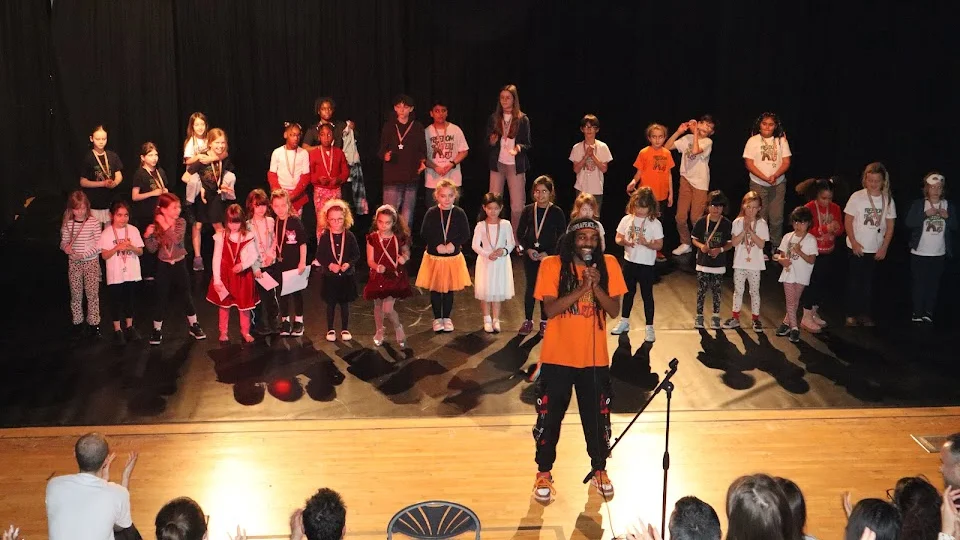 Trial Available
Breakdance, Commercial, Contemporary & 9 more styles
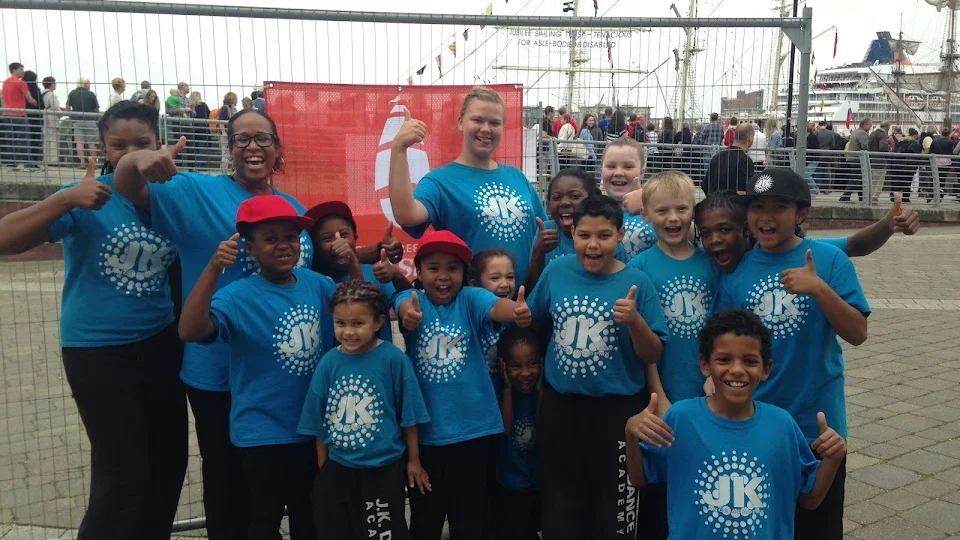 Trial Available
Breakdance, Hip Hop, Ballet & 6 more styles
Breakdance, Contemporary
 Trial Available
Breakdance, Hip Hop, Commercial & 5 more styles
Breakdance, Ballet, Jazz & 5 more styles
Breakdance, Street Dance, Contemporary & 1 more style
 Trial Available
Breakdance, Street Dance, Ballet & 3 more styles
Power moves and freezes demand real core, arm and shoulder strength — breaking builds functional strength that carries over into other physical activity.
Floorwork and transitions require a genuine range of motion, and regular practice steadily improves flexibility through the hips, spine and shoulders.
There is no single "correct" way to breakdance — dancers build a personal style and freestyle vocabulary, making it one of the more creatively open dance forms to learn.
Breaking is built around crews, cyphers and battles — a genuinely social culture based on mutual respect between dancers, not just a class you attend and leave.
A full breaking session — toprock, footwork and power moves in sequence — is a demanding, sustained workout in its own right.
Progressing through foundational moves toward battle-ready skills builds real, earned confidence, both on the floor and off it.
Dedicated foundational classes teach toprock and footwork fundamentals before introducing power moves, so no prior experience is needed to start.
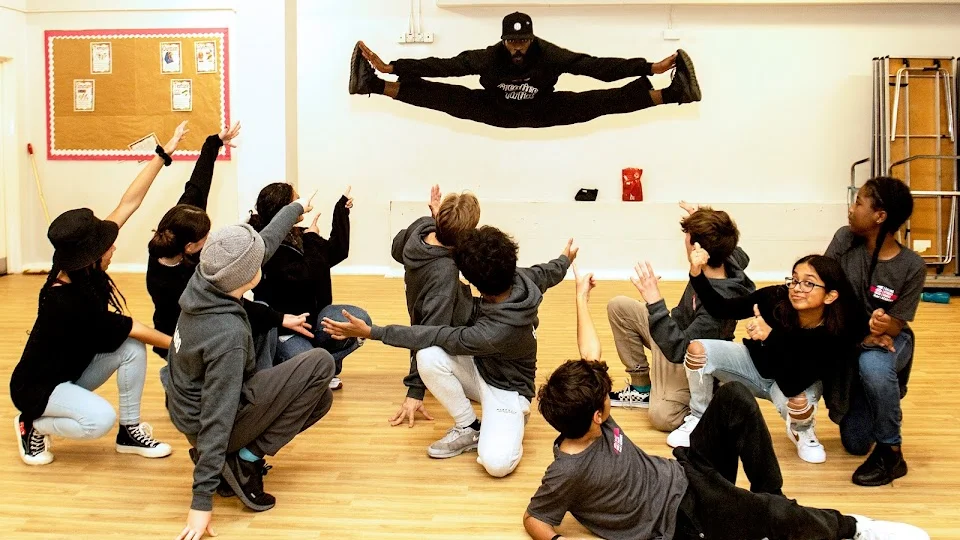
Several London studios run youth-specific breaking classes and crews, often building toward local battles and showcases.
Dancers with a hip-hop or street dance background can go deeper into one specific technical discipline within that culture.
Breaking offers a creative, non-repetitive alternative to gym-based training, building strength and flexibility through movement rather than reps.
For dancers wanting to battle, London has an active competitive scene, including the UK B-Boy Championships, running since 1996.
Beyond formal classes, breaking has a living social scene of cyphers and jams where dancers of all levels practice and battle informally.
Breaking arrived in London in the early 1980s — the Rock Steady Crew's 1982–83 European tour, which included London dates, is widely credited with introducing breaking to British audiences and sparking the UK's first generation of B-boys and B-girls. The scene has stayed active ever since, through crews, jams and battles across the city.
The UK B-Boy Championships, running since 1996, is one of the world's longest-established breaking competitions, and Sadler's Wells has hosted Breakin' Convention — the international hip-hop dance theatre festival founded by Jonzi D in 2004 — every year since. For regular classes, Ealing Street Dance Academy runs a dedicated breakdance programme teaching B-boy/B-girl fundamentals, Boom Arts Academy in Croydon offers breaking alongside its wider hip-hop programme, and Pineapple Dance Studios hosts weekly sessions from Foundationz Cru, a breaking crew active in London since the mid-1990s.
Breakdance classes in London typically start with toprock and basic footwork before progressing to power moves and freezes — the physically demanding elements most people picture when they think of breaking.
Many classes welcome complete beginners, and some studios run youth-specific groups or crews that build toward local battles and showcases rather than staying purely class-based.
Loose, flexible clothing that allows floor movement — joggers or tracksuit bottoms with some stretch, and a t-shirt without a raised back print, which can cause friction or discomfort during spins and floor transitions.
Trainers with a flat, grippy sole work best for footwork and power moves; some beginners also wear light knee or elbow protection while first learning floorwork, though this isn't required.
Next Step
Explore our curated guide to London's best dance studios — filtered by style, area and level.
Browse Dance Studios in London Hip Hop
  Street Dance
  House Dance
  Commercial Dance