The Viennese Waltz is the oldest and fastest of the ballroom dances — a breathtaking circular style with origins in the grand ballrooms of eighteenth-century Vienna, danced almost twice as fast as its slower, more familiar descendant.
The Style
What Is Viennese Waltz?
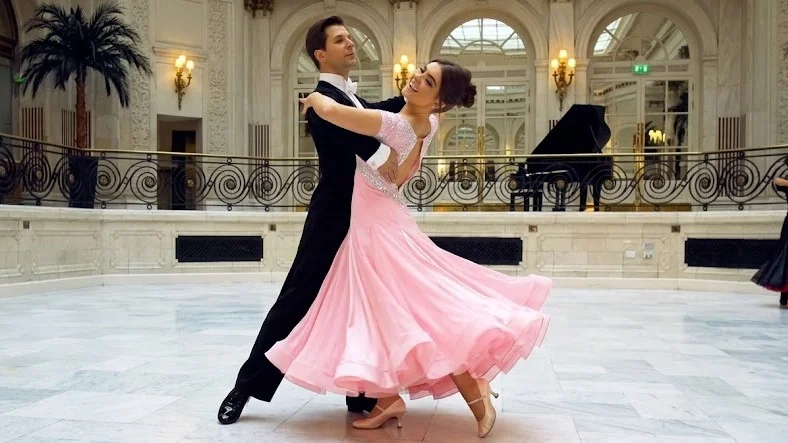
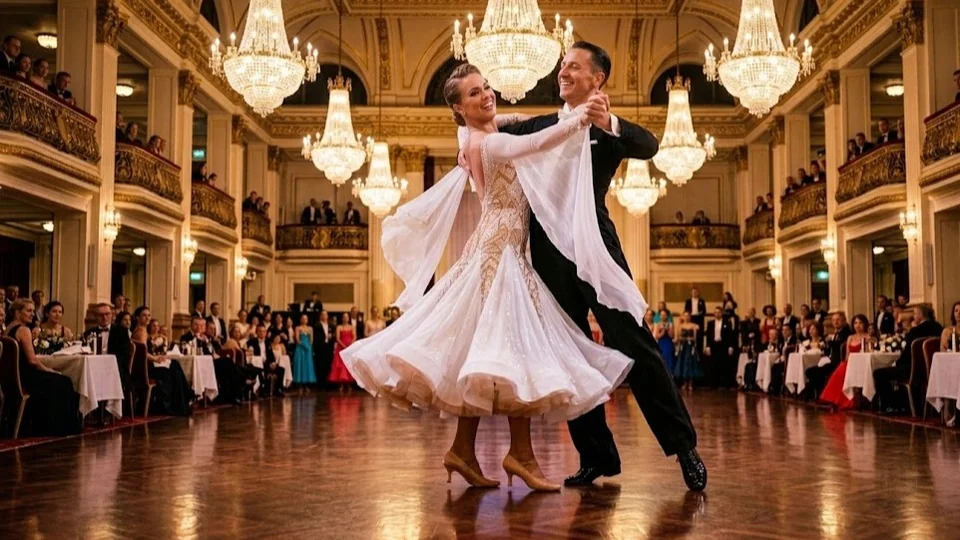
The Viennese Waltz is, technically, the original waltz — it descends directly from the Austrian Ländler of the 1700s, making it the oldest of the five International Standard dances. The slower "English" or "slow" waltz most beginners learn first is actually a later, deliberately slowed-down development of this older dance, created to allow for more elaborate figures.
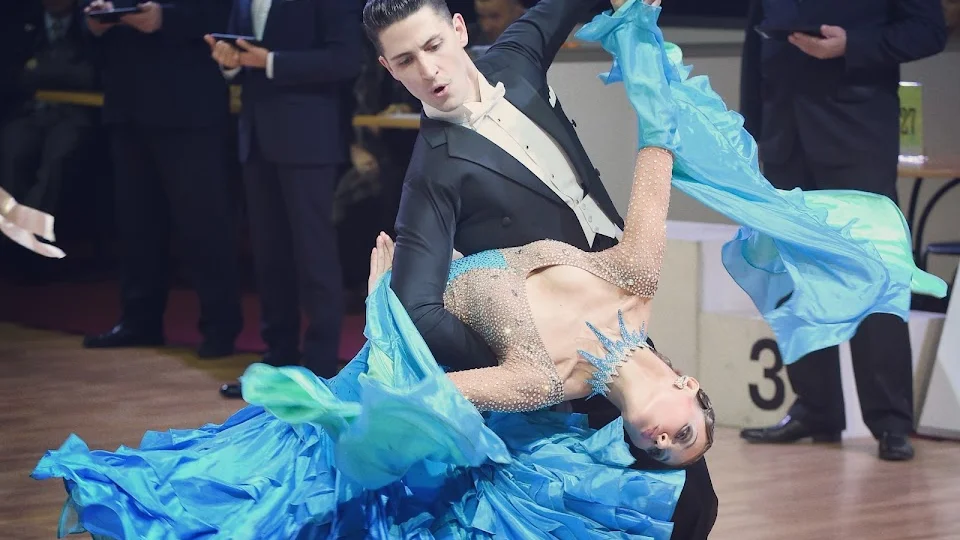
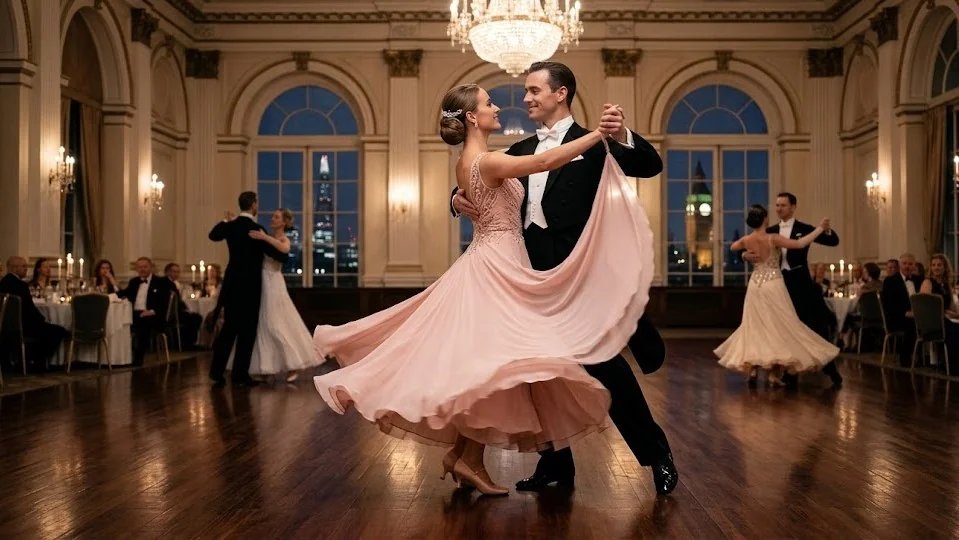
Danced at around 180 beats per minute — roughly double the tempo of the slow waltz — Viennese Waltz is built almost entirely from continuous natural and reverse turns linked by change steps, sending the couple sweeping around the floor in a near-constant rotation. This has earned it the nickname "the Rotary Waltz" among dancers.
The style requires a strong frame, precise timing and the ability to sustain elegant posture and flow at considerable speed. Its small vocabulary of figures belies the technical demands of executing it beautifully — most schools introduce it only once students have a grounding in the slower standard waltz.
Viennese Waltz vs Waltz
Waltz and Viennese Waltz share the same 3/4 timing and rotational technique, but they are genuinely different dances to learn and to watch — one gliding and measured, the other fast and continuously turning.
TempoMuch faster, roughly 60 bars per minuteSlower, roughly 28-30 bars per minute
Movement QualityContinuous rotation — natural and reverse turns sweeping around the floorGliding, with a pronounced rise and fall
HistoryThe oldest of the Standard ballroom dances, from 18th-century ViennaA later, slowed-down development of the original waltz
Learning CurveTypically introduced after some grounding in the standard waltzEasier entry point — usually the first Standard dance taught
Best ForDancers who want the speed and drama of continuous turningBeginners, and couples preparing a first dance
Use the map below to find studios near you, or filter by area and audience to jump straight to our curated list of the best-rated Viennese Waltz studios in London further down the page.
Area
Audience
Best Studios to Learn Viennese Waltz in London
10 studios
No Viennese Waltz studios found for these filters.
Advertisement
Why Try It
Benefits and What You Will Gain
◈
Thrilling Sense of Speed
The continuous rotation and near-double tempo of Viennese Waltz give it a genuine exhilaration that the slower standard waltz doesn't offer — many dancers describe it as the most purely fun of the Standard dances.
◈
Core Stability at Pace
Maintaining frame and posture through continuous fast turns demands — and builds — real core strength and balance under speed.
◈
Spatial Awareness
Sustained rotation around a crowded floor sharpens spatial awareness and floorcraft in a way slower dances rarely test.
◈
Cardiovascular Fitness
The faster tempo makes Viennese Waltz noticeably more cardio-intensive than the standard waltz, while remaining low-impact on the joints.
◈
A Genuine Ball Skill
Because it's a centrepiece of formal balls and galas — including dedicated "Vienna Ball" events — learning it well is a real, usable social skill, not just a technique exercise.
◈
Historical Connection
As the oldest Standard dance, Viennese Waltz connects directly to the ballroom tradition's origins — a different kind of satisfaction from learning a twentieth-century style.
Is It for Me?
Who It Is Suitable For
Existing Ballroom Dancers
Viennese Waltz is usually introduced once students already have a grounding in the standard waltz — a natural next step rather than a typical first class.
Adults
Adult students often add Viennese Waltz to their ballroom training specifically for its speed and thrill compared to the smoother standard dances.
Competitive Dancers
Viennese Waltz is one of the five official Standard dances, making it essential training for anyone pursuing competitive ballroom.
Couples Preparing for a Ball
Some London schools run dedicated preparation classes ahead of formal events such as a Vienna Ball, where Viennese Waltz is a centrepiece of the evening.
Fitness-Focused Movers
The faster tempo gives standard ballroom training a noticeably more intense cardio workout than the slower dances in the syllabus.
Confident Beginners
A small number of schools do teach it early to confident, coordinated beginners — though most recommend starting with the standard waltz first.
Learning
How Classes Work in London
Viennese Waltz is taught at most serious ballroom studios in London and is a staple of competitive ballroom dance training. It is also performed at formal balls and social dance events, where its speed and drama make it a genuine showpiece.
Wedding Dance Workshops lists Viennese Waltz explicitly among its packages, taught by Paul and Edita with a money-back guarantee. Zoltan's Ballroom and Latin runs dedicated "Vienna Ball Preparation" classes — a direct, distinctive link to the dance's home city. Kelly's Dance Studio, teaching for 45 years under founders Keith and Kornelia and named South West London's Dance School of the Year in 2023, has run an annual Gala Ball for 40 years and teaches Viennese Waltz within its fortnightly intermediate/advanced programme. Arthur Murray Dance Studios, part of a franchise dating back to 1912, includes it within its century-old Standard syllabus.
Viennese Waltz classes in London are available at ballroom studios offering competitive or social training. The style is typically introduced after students have a grounding in the standard waltz.
The dance rewards relaxation, musicality and trust between partners — qualities developed through progressive training.
What Should You Wear?
The same general ballroom dress code applies: smart-casual clothing that allows free movement, with suede-soled ballroom shoes strongly recommended — the continuous fast turns of Viennese Waltz make secure, well-fitted footwear more important here than in almost any other Standard dance.
For ball or gala preparation specifically, more formal eveningwear is often expected on the night itself, though everyday class only requires standard practice wear.
Common Questions
Frequently Asked Questions
Viennese Waltz is danced at roughly double the tempo, built almost entirely from continuous rotating turns, and is actually the older of the two — the slower waltz most beginners learn first is a later, slowed-down development of it. See our Waltz guide for the full comparison.
It's more demanding than the standard waltz because of its speed and continuous rotation, which is why most schools introduce it only after students already have some grounding in the slower waltz.
It's taught at most serious ballroom academies as part of their Standard syllabus, and at dedicated first-dance specialists who offer it as an alternative to the standard waltz.
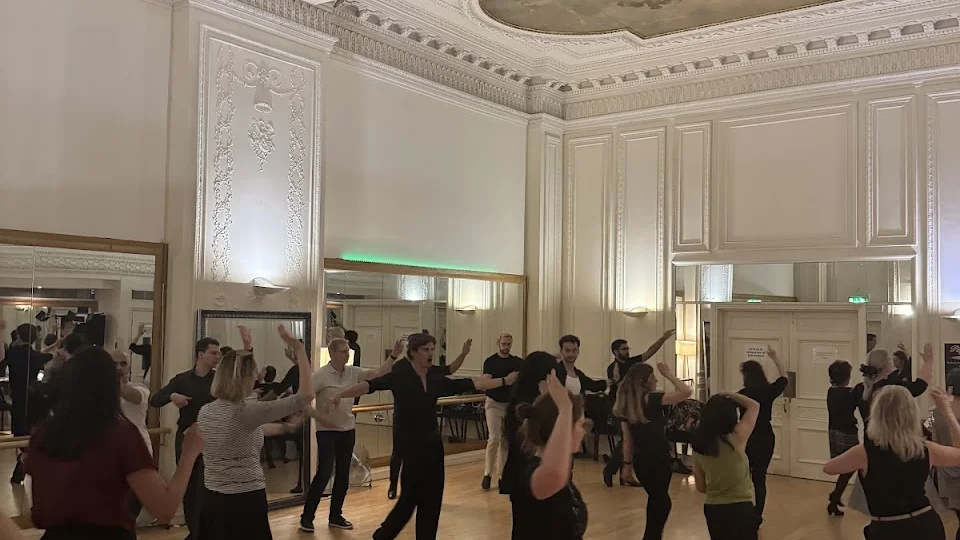
Group classes typically run 45-60 minutes; couples preparing it as a wedding or ball dance usually book a short series of private lessons rather than a single session.
Yes — some couples choose it specifically for its speed and drama over the more traditional slow waltz, though it generally takes a little more preparation time given the faster tempo.
It's a formal ballroom event centred on Viennese Waltz, in the tradition of Vienna's grand balls. Some London schools run preparation classes specifically for these events, aimed at intermediate dancers rather than complete beginners.
Not for most group classes — many ballroom schools welcome singles and rotate partners during the lesson, though private lessons typically expect you to bring your own partner.
Suede-soled ballroom shoes are strongly recommended — the continuous fast turns make secure, well-fitted footwear more important here than in the slower Standard dances.
 Waltz
Waltz  Foxtrot
  Quickstep
  Ballroom Dance