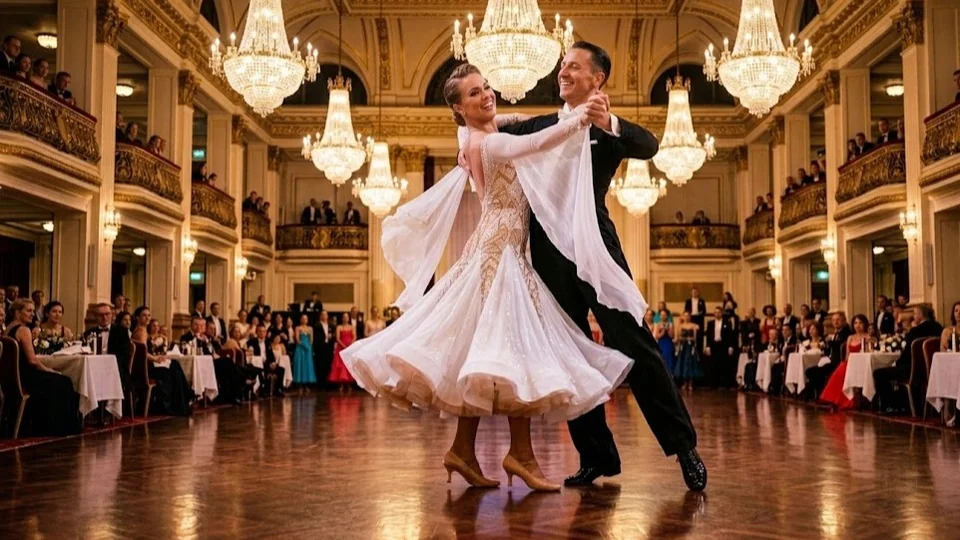
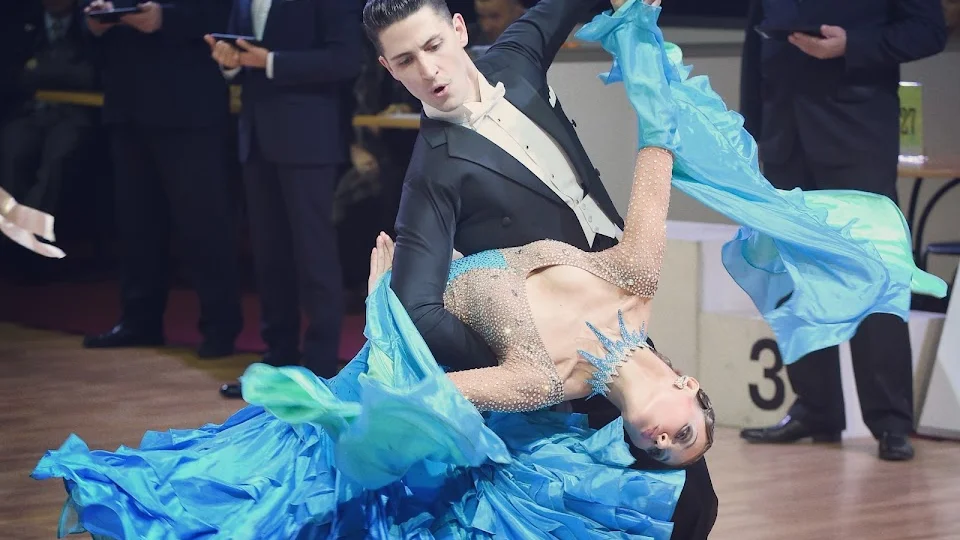
The quickstep is the liveliest of the five International Standard dances — a fast, elegant style full of chassés, hops and running steps that demands both precision and exuberance, and a regular showstopper on TV ballroom competitions.
The Style
What Is Quickstep?
The quickstep developed in 1920s England from a fast branch of the foxtrot, fused with the Charleston — originally billed as "Quicktime Foxtrot and Charleston" before being shortened to quickstep. It is widely said to have debuted in its modern partnered form at the 1927 Star Championship, when dancers Frank Ford and Molly Spain adapted Charleston movement (minus its characteristic knee action) into a couple format.
It is characterised by a light, bouncy quality, with progressive chassés, runs and hops alongside figures inherited from the foxtrot, danced at a fast tempo of around 50 bars per minute — making it the quickest of the five Standard dances, as its name suggests.
The ISTD codified quickstep's figures and technique in the 1930s, cementing its place in the competitive International Standard repertoire it still holds today.
Quickstep and foxtrot share the same technical roots — quickstep developed directly from a faster branch of foxtrot in the 1920s — but they feel like genuinely different dances today.
TempoFast — the quickest of the five Standard dancesModerate, smooth and unhurried
Movement QualityLight, bouncy, with chassés, hops and runsLong, gliding walking steps
EnergyHigh-energy and athleticControlled and relaxed
HistoryDeveloped from foxtrot in 1920s England, fused with CharlestonDeveloped in New York around 1914
Best ForDancers who want speed, energy and athleticismDancers who want elegant, low-impact flow
Use the map below to find studios near you, or filter by area and audience to jump straight to our curated list of the best-rated Quickstep studios in London further down the page.
Area
Audience
Best Studios to Learn Quickstep in London
13 studios
Quickstep's fast chassés, runs and hops make it the most physically demanding of the Standard dances — genuine cardio wrapped inside ballroom technique.
◈
Sharp Coordination
The quick footwork and constant changes of direction sharpen coordination and reaction speed in a way the slower Standard dances don't train.
◈
Performance Flair
Quickstep's light, bouncy energy rewards personality and showmanship as much as technique — it's consistently one of the most crowd-pleasing dances to watch and to perform.
◈
Confidence Under Pace
Maintaining elegant ballroom posture while moving quickly builds a specific kind of composure and confidence that transfers well to performance settings.
◈
Builds on Existing Technique
Because quickstep developed from foxtrot, dancers who already have foxtrot training progress noticeably faster when they add quickstep.
◈
Competitive and Social Versatility
Quickstep works equally well as competitive Standard repertoire and as a genuinely fun social dance at faster ballroom evenings.
Is It for Me?
Who It Is Suitable For
Existing Ballroom Dancers
Quickstep is usually introduced once students have some grounding in waltz and foxtrot — a natural, energetic next step in the Standard syllabus.
Adults
Quickstep is a popular adult class format in London, valued for its high energy and performance flair compared to the smoother Standard dances.
Competitive Dancers
Quickstep is one of the five official Standard dances, making it essential training for anyone pursuing competitive ballroom.
Fitness-Focused Movers
As the fastest Standard dance, quickstep gives the most intense cardio workout within the ballroom syllabus.
Confident, Energetic Beginners
While most schools introduce it after waltz and foxtrot, confident beginners with some coordination often take to its bounce and energy quickly.
TV Ballroom Fans
For dancers inspired by quickstep routines seen on televised ballroom competitions, it's one of the most immediately recognisable and rewarding Standard dances to learn.
Learning
How Classes Work in London
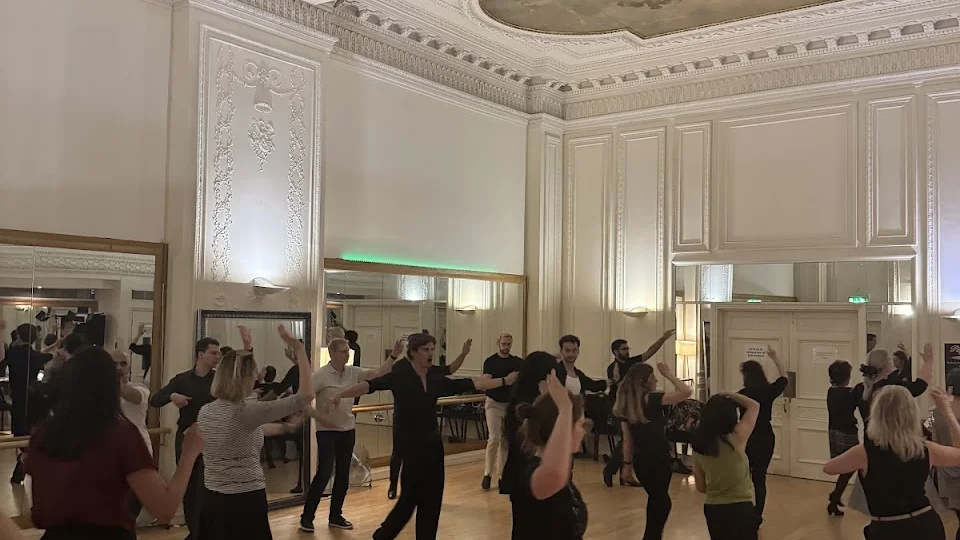
Quickstep is taught at ballroom studios across London as part of the International Standard curriculum. It is a popular competitive discipline and also enjoyed as a social dance at faster ballroom evenings.
Zoltan's Ballroom and Latin, led by former Hungarian formation-team champion Zoltan Szalontay, lists quickstep explicitly among its Standard programme, with taster sessions available from its Victoria studio. Dance Delight is co-founded by Anna Stovba, Ukrainian 10-dance champion and WDC European ballroom champion currently ranked in the UK's top 5, alongside professional competitor Nikita Lobchenko. Voxta Dance Club teaches with ISTD-qualified instructors across four London locations (Finchley Central, Ealing, Northfields and Greenford), from beginner level through to exam and competition preparation. Vera the Diva Ballroom & Latin, an ISTD member school running since 2013, teaches the full Standard programme through 7-week courses.
Quickstep classes in London are integrated into standard ballroom training programmes. Beginners learn the quarter turn, progressive chassé and natural spin turn before moving on to more complex choreography.
The dance rewards both precision and personality, making it one of the most entertaining styles to develop at all levels.
What Should You Wear?
The same general ballroom dress code applies: smart-casual clothing that allows fast, free movement, with suede-soled ballroom shoes strongly recommended — the chassés, hops and quick direction changes are considerably harder in regular trainers, which grip the floor too much.
Because of the physical intensity, many dancers bring a change of top to quickstep-heavy sessions, even at social class level.
Common Questions
Frequently Asked Questions
Most schools introduce it after waltz and foxtrot rather than as a first class, since its speed and footwork build more easily once you have some Standard technique — but confident, coordinated beginners often pick it up quickly.
Quickstep developed directly from a faster branch of foxtrot in the 1920s, fused with Charleston — it's the fastest, bounciest Standard dance, while foxtrot stays smooth and moderate-paced. See our Foxtrot guide for the full comparison.
Most students with some existing Standard grounding feel comfortable with the basic quarter turn and chassé within a handful of lessons; building full syllabus figures at speed takes ongoing, regular practice.
Around 50 bars per minute — noticeably faster than waltz, foxtrot or Viennese waltz — which is exactly where the name "quickstep" comes from.
Not for most group classes — many ballroom schools welcome singles and rotate partners during the lesson, though private lessons typically expect you to bring your own partner.
Suede-soled ballroom shoes are strongly recommended — regular trainers grip the floor too much for the chassés, hops and fast direction changes quickstep relies on.
Yes — it's one of the five official International Standard dances, present at every level from Bronze exams through to top international competition.
It's generally recommended, since quickstep shares its technical base with foxtrot — most schools introduce it once you have a grounding in the smoother Standard dances first.
 Foxtrot
  Waltz
Waltz  Ballroom Dance
  Jive
Jive